
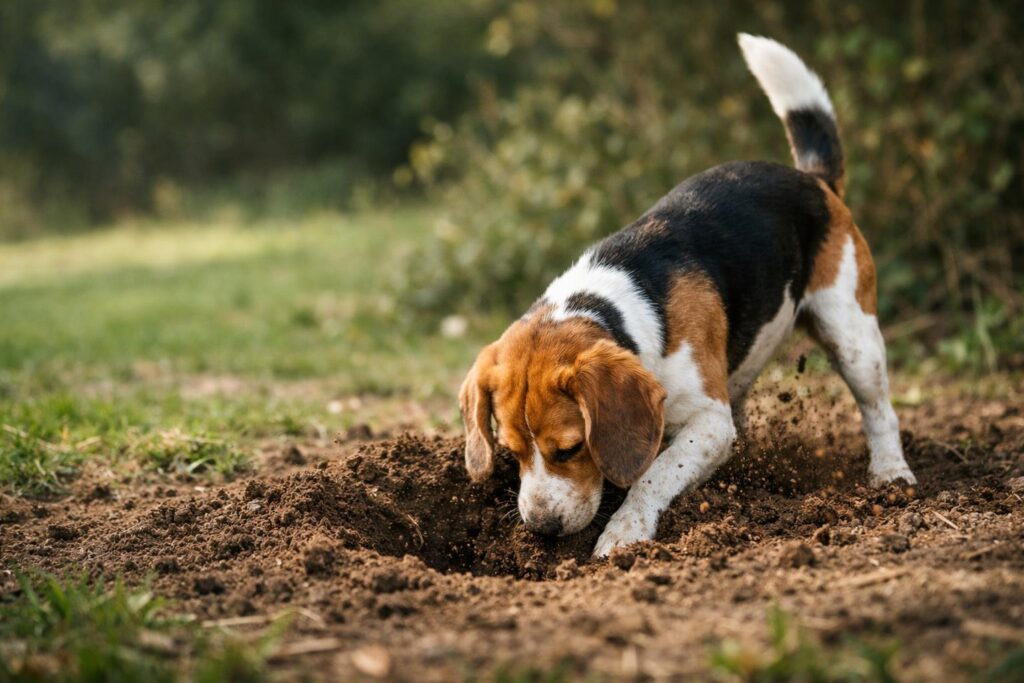
A beagle and a soft patch of soil is a combination that never ends well for the garden. If you’ve come home to a yard that looks like something was very determined to get somewhere, you’re not alone. Beagle digging is one of the most common complaints from owners, and it’s also one of the most misunderstood.
Most people try to stop the digging. That’s the wrong goal. Digging is a deep-rooted instinct in this breed, and fighting it head-on gets you nowhere. What actually works is figuring out why your beagle is digging and fixing the right thing. The trigger tells you the solution.
This guide covers every main cause of beagle digging, how to tell them apart, and what to do about each one. If digging is just one item on a longer list of beagle behaviour you’re working through, the full guide to common beagle behaviour problems is a good companion read.
Why Do Beagles Dig?
Beagles dig because they were bred as scent hounds to track prey underground. The urge to follow a scent into soil is as hardwired as following it across a field. On top of that instinct, beagles also dig for comfort, entertainment, and to escape. Digging is natural. What matters is knowing which reason applies to your dog right now.
Wisdom Panel notes that beagles have an exceptional sense of smell and were commonly used to hunt rabbits, so it’s no surprise these hound dogs are often seen with their nose to the ground or digging in search of small animals. That instinct doesn’t switch off just because your beagle lives in a suburban backyard.
Beyond hunting drive, veterinarians at Clearview Veterinary Hospital point out that digging also releases endorphins, which gives dogs a genuine sense of relief. That’s why a bored or anxious beagle will often turn to digging without any obvious trigger. It just feels good to them.
The key is that not all digging looks the same and not all digging comes from the same place. Reading the pattern tells you everything.
The Six Main Reasons Beagles Dig
Before picking a fix, it helps to match the digging to its cause. Here’s what each one typically looks like.
1. Temperature. Shallow, wide pits dug in shaded or damp areas on hot days. BeaglePro explains that beagles instinctively dig into soil to reach the cooler layer underneath when the temperature rises. This is especially common in yards with little shade. The fix is simple: more shade, a paddling pool, and fresh water available at all times.
2. Burying food or toys. Random holes across the yard, sometimes with a treat or toy placed in them. This is a caching instinct carried over from wild ancestors who buried surplus food to protect it. If your beagle disappears outside with something in their mouth and comes back empty-handed, you’ll likely find a small excavation nearby.
3. Scent tracking or prey drive. Frantic, focused digging in one specific spot rather than scattered across the yard. Your beagle has picked up the scent of a mole, a mouse, or another burrowing animal and is following it into the ground. This type of digging is intense and hard to interrupt mid-flow. BeaglePro recommends using safe, dog-friendly pest repellents to make your yard less attractive to burrowing animals if this is a recurring problem.
4. Boredom or excess energy. Scattered holes appearing after your beagle has been left alone for a while. No particular pattern, no focused spot, just general excavation wherever the mood strikes. This is the most common type of digging in adult beagles and the easiest to address. Reading the hole pattern helps here: random craters across the yard usually mean boredom, while focused digging near a specific area means something else is going on.
5. Nesting. Indoor digging at carpet corners, blankets, sofa cushions, or their crate bedding. There’s nothing to actually dig into, but the instinct runs deep enough that it happens anyway. This is usually harmless unless it’s destroying carpets or bedding. More on this below.
6. Escape. Digging along the fence line, especially at corners, gate thresholds, or soft patches near the base. This one is different from all the others. It needs a physical fix, not just training. We cover it separately in the next section.
Fence Line Digging Is a Safety Issue, Not Just a Behaviour Problem
When a beagle digs along the fence line, it’s almost always escape-motivated. A strong scent on the other side, an unneutered male picking up a female in heat, or boredom driving them to probe for a weak point. This type of digging needs a physical fix first. Training alone won’t hold against a live scent.
Beagles are natural escape artists. As covered in the behaviour problems guide, fencing needs to address the ground as well as the height. A beagle that can’t jump will dig under. No amount of recall training is fully reliable against a strong scent drive in an open environment. That’s not a training failure. It’s biology.
Here’s what actually works for fence line digging:
- Bury chicken wire or hardware cloth. BeaglePro recommends laying metal chicken wire along the inside base of the fence, secured with pegs into the ground. An L-footer design works especially well: the wire runs vertically into the ground then turns inward horizontally, so a digging dog hits resistance no matter how deep they go.
- Check for soft spots and erosion regularly. Rain and seasonal ground changes create gaps at the base of fences over time. Walk the fence line every few months and fix any dips or erosion before they become an exit route.
- Pay special attention to gates. Gates are often the weakest point. Beagles learn quickly that humans use gates and will target them. Self-closing latches and a solid sweep at the base of the gate close the most common gaps.
- Use deterrent spray as a short-term aid. Concentrated citronella spray applied to the fence base can discourage digging in specific spots while you work on the physical barrier. It’s a support measure, not a standalone fix.
Treat fence line digging as a safety issue first. A beagle that gets out near a road is in serious danger. Sort the fence before worrying about anything else.
How to Set Up a Dig Zone (and Actually Get Your Beagle to Use It)
The most effective long-term fix for a beagle that digs everywhere is giving them one place where digging is allowed. A designated dig zone redirects the instinct instead of fighting it. Once they learn it’s their spot, they’ll use it. The key is making it more appealing than everywhere else, at least in the beginning.
This is the approach the Humane Society recommends for dedicated diggers. Instead of trying to eliminate the behavior, you redirect it to a safe, acceptable outlet. For a breed like the beagle, where the drive to dig is genuinely instinctive, this tends to work far better than constant correction.
Start by choosing a corner of the yard you don’t mind dedicating to digging. A child’s sandbox works well, and so does a defined patch of loose, soft soil. Make it large enough for your beagle to move around in comfortably. Then make it irresistible: bury treats, chews, or favourite toys just below the surface. The goal is to make the dig zone the most interesting thing in the yard. When your beagle discovers they can find things there, it becomes genuinely rewarding to use.
When you catch them digging somewhere they shouldn’t, interrupt with a firm “no dig,” guide them calmly to the zone, and reward when they dig there instead. You may need to do this many times before it sticks. Wag’s training guide points out that you want the zone to feel like the obvious choice, not a compromise. Consistent praise and the occasional treat when they use it correctly builds exactly that association over time.
Don’t rush this. A beagle that has been digging in the flower bed for months has a habit built up. The dig zone works, but it takes a few weeks of consistent redirection to replace an established pattern.
Indoor Digging at Carpets and Blankets
Indoor digging confuses a lot of owners because there’s clearly nothing to dig into. Your beagle isn’t going to find a mole under the living room carpet. But the instinct doesn’t care about logic.
Modern Beagle explains that beagles will scratch and dig at blankets and bedding as a nesting behaviour, trying to create a comfortable resting spot or hide something they value. It’s the same instinct that drives outdoor digging, just with fewer practical results.
In most cases, gentle indoor digging at blankets is harmless. The time to address it is when it starts damaging carpet, flooring, or bedding.
A crate with loose blankets is the simplest fix. It gives your beagle a place to dig and burrow without causing damage, and most will focus their indoor digging there once they have the option. If they keep targeting a specific carpet corner or area of flooring, a bitter apple deterrent spray on that spot breaks the habit while you redirect their attention elsewhere. If there’s a whole room where the carpet digging keeps happening, close it off temporarily with a gate. This stops the habit from reinforcing itself while you work on it in a more controlled way.
Indoor digging tends to spike when a beagle is under-stimulated or spending too much time alone. If it’s getting worse, it’s usually worth looking at the exercise and enrichment side of things first.
Exercise and Mental Stimulation Cut the Digging Down
A well-exercised beagle with a tired nose digs far less out of boredom. Most digging that appears after a few hours alone traces back to unspent energy. More exercise and regular nose work don’t eliminate the instinct but they reduce how urgently a beagle needs an outlet for it.
This is especially true for beagles because they’re scent hounds. Physical exercise alone doesn’t fully satisfy them. Wag’s training guide makes this point clearly: a beagle stuck in a yard with nothing to do will turn to digging because it’s stimulating, purposeful, and physically satisfying all at once. You need to replace that with something that hits the same notes.
Two walks a day makes a real difference, with one longer session in the morning. A tired beagle is far less motivated to excavate the garden when left alone in the afternoon. Beyond physical walks, nose work is where beagles really get their energy out. Scatter feeding dinner across the lawn, setting up treat trails, or using a snuffle mat gives their nose a genuine job to do. For this breed, nose engagement counts as mental exercise and wears them out faster than you’d expect. A stuffed KONG or puzzle feeder left out before you leave also helps fill the transition from company to alone time, which is usually when boredom digging starts.
I noticed with Tyler that the worst digging phases always lined up with lower-activity stretches. Busy weeks, shorter walks, less time in the yard with me. The moment the routine came back, so did the calm. The dig zone helped too, but exercise did most of the heavy lifting.
Putting It All Together
Beagle digging is one of those problems that looks simple but has several completely different causes sitting underneath it. Temperature, boredom, prey drive, nesting, and escape motivation all produce holes, but they need different responses.
Start by watching where and when the digging happens. Scattered holes after alone time points to boredom. Focused frantic digging in one spot points to scent or prey. Fence line digging points to escape. That pattern is your diagnosis.
Then match the fix to the cause: more exercise and a dig zone for boredom diggers, a physical fence barrier for escape attempts, shade and water for heat diggers, and crate blankets for indoor nesters. Most beagles need more than one fix running at the same time.
The one thing that doesn’t work is punishing after the fact. By the time you’ve found the hole, your beagle has no connection to the act. Catch it happening, redirect calmly, reward the right behaviour, and keep at it.
If chewing is also on your list, the guide on fixing destructive chewing in beagles covers the same redirect-and-redirect approach in detail.
Frequently Asked Questions
Is it normal for beagles to dig?
Yes, completely normal. Beagles were bred to follow scent trails to prey underground, so the drive to dig is hardwired into the breed. Some beagles dig more than others depending on how much exercise and mental stimulation they get, but the instinct itself is not a behaviour problem. It only becomes a problem when there’s no appropriate outlet for it.
Why does my beagle only dig along the fence?
Fence line digging is almost always escape-motivated. Your beagle has detected something interesting on the other side, whether that’s another dog, a scent trail, or just curiosity about what’s beyond the boundary. This type of digging needs a physical barrier fix, like buried chicken wire or hardware cloth along the base of the fence, in addition to addressing their exercise and stimulation needs.
How do I stop my beagle from digging up my garden beds?
The most effective approach is combining a physical deterrent with a redirect. Place large rocks or decorative stones around the edges of garden beds to make them harder to access. At the same time, set up a designated dig zone elsewhere in the yard and actively reward your beagle for using it. Over time, the dig zone becomes the obvious choice and the garden beds lose their appeal.
My beagle digs at the carpet indoors. How do I stop it?
Indoor carpet digging is a nesting instinct. Your beagle is trying to create a comfortable spot or hide something they value. A crate with loose blankets gives them a safe place to satisfy that urge without damaging your floors. Apply a deterrent spray like bitter apple to the specific carpet corners they keep targeting and gate off the room temporarily if needed while the habit breaks.
Will more exercise stop my beagle from digging?
More exercise reduces boredom-driven digging significantly, but it won’t eliminate instinct-driven digging entirely. A well-exercised beagle with regular nose engagement is far less likely to dig out of frustration or excess energy. But if the digging is driven by prey scent, heat, or an escape motivation, exercise addresses only part of the picture. You still need to fix the specific trigger.