A beagle not eating is genuinely worrying, especially because beagles are known for loving food. It can happen for reasons ranging from boredom and stress to dental pain or illness. When Tyler refused his bowl for two days straight, our vet told us to focus on water intake first. Here’s what I found out, what we tried, and when it’s time to stop waiting and call your vet.
Tyler will eat almost anything. I once watched him sniff out a piece of dry pasta that had rolled under the fridge three days ago. He tracked it down like it was a five-course meal.
So when my beagle stopped eating, I knew something was off.
He looked at his bowl, sniffed it, and walked away. Day one I thought maybe he was just being fussy. By day two, I was on the phone with the vet. If your beagle is not eating, you’re probably feeling the same mix of worry and confusion I felt. The good news is that there are usually clear reasons behind it, and most of them are manageable once you know what you’re dealing with.
Here’s everything I learned.
Why Is My Beagle Not Eating?
Beagles stop eating for a range of reasons, from mild and behavioural to potentially serious. The most common causes are: boredom with the same food, environmental stress or routine changes, dental pain, an upset stomach, too many treats crowding out meals, or an underlying illness. Identifying the pattern around when it started helps narrow down the cause quickly.
Let me break these down one by one.
Food boredom is more common than people think. Beagles are scent-driven dogs, and eating the exact same kibble every day can cause them to simply lose interest. If Tyler suddenly turned his nose up after weeks of eating the same brand, this was the first thing I considered.
Stress and routine changes hit beagles harder than most breeds. A new pet in the house, a change in your work schedule, moving furniture around, or even a new smell in the home can put them off their food for a day or two. According to Small Door Veterinary, once the initial anxiety passes, most dogs return to normal eating habits on their own.
Dental pain is easy to miss. If eating hurts, your beagle will just stop eating. Check their mouth for anything stuck in the gums, foul smell, or visible tartar buildup. Any of those are worth a vet visit.
Upset stomach is another big one. Beagles are notorious for eating things they shouldn’t, which leads to indigestion or gastritis. In those cases, refusing food is actually their body’s natural response. They’re giving their stomach a rest.
Too many treats can quietly sabotage meals. If your beagle knows something tastier might come along later, they’ll hold out. Treats should make up no more than 10% of daily food intake, according to PetMD.
Illness is the cause that worries owners most, and rightly so. Loss of appetite can be a symptom of infections, kidney issues, liver problems, or other conditions. If the food refusal comes with vomiting, lethargy, or noticeable weight loss, don’t wait it out.
How Long Can a Beagle Go Without Eating Before It Becomes a Problem?
A healthy adult beagle can go two to three days without food without facing immediate harm, as long as they’re still drinking water. Water is the more urgent concern. Without adequate hydration, problems can develop much faster than from skipping meals alone.
That said, 48 hours of no eating is generally the threshold where you should consult a vet, even if your dog seems otherwise fine. Puppies and senior beagles have even less tolerance and should be seen sooner.
When Tyler hit day two, that’s exactly when I called. The vet wasn’t alarmed about the food yet. The first question she asked was: “Is he still drinking water?”
That question reframed how I was thinking about the whole situation.
The Water Intake Rule: Why Your Vet Will Ask About It First
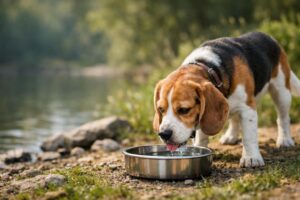
When your beagle stops eating, water intake becomes the most important thing to monitor. Here’s why: dehydration can set in much faster than starvation, and dehydrated dogs lose their appetite even further, creating a downward spiral.
The general guideline, according to AKC, is that dogs need roughly one ounce of water per pound of body weight per day. So if Tyler weighs 25 pounds, he needs around 25 ounces of water daily.
Our vet told me to start tracking how much Tyler was drinking each day. She also showed me two quick checks I could do at home.
- The gum check: Run your finger along your dog’s upper gums. They should feel wet and slippery. If they feel dry or sticky, that’s a warning sign.
- The skin tent test: Gently pull the skin at the back of the neck up about two inches and let go. In a well-hydrated dog, the skin snaps back in under two seconds. If it’s slow to return, dehydration may already be setting in.
The AKC also lists sunken eyes, dry nose, and thick saliva as signs to watch for. If you spot any of these, contact your vet immediately.
Tyler was still drinking, which was a relief. But barely. That’s when I started thinking about how to get more fluids into him.
What I Did When Tyler Stopped Eating: The Watermelon Trick
This one surprised me.
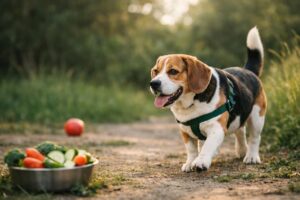
After the vet call, I was looking for ways to keep Tyler hydrated without forcing him to drink. I’d read that fruits with high water content can top up a dog’s fluid intake alongside regular drinking. Watermelon was at the top of the list.
According to AKC, watermelon is safe for dogs to eat, is packed with vitamins A, B6, and C, and is made up of around 92% water. That’s a serious hydration boost for a dog who’s being stubborn about his bowl.
I blended a small handful of seedless watermelon flesh into a juice and offered it to Tyler in a shallow bowl. He sniffed it, looked at me like I’d lost the plot, and then lapped the whole thing up.
It wasn’t a cure. But it kept him hydrated while we figured out what was going on.
A few things to keep in mind if you try this:
- Remove all seeds. Hard black seeds can cause an intestinal blockage. Use seedless watermelon or remove seeds carefully.
- No rind. The green and white outer skin is hard to digest and can cause stomach upset, according to PetMD.
- No added sugar or syrup. Fresh flesh only. Nothing canned or sweetened.
- Keep it small. Watermelon is a supplement to water, not a replacement. Purina notes that treats including fruit should stay under 10% of your dog’s daily intake.
The vet actually approved of this approach when I mentioned it. Getting fluids in any safe way while your dog won’t eat is a smart short-term strategy.
Could It Just Be Pickiness or Boredom?
Sometimes a beagle refusing to eat is not a health issue at all. It’s a mood. Beagles can go through phases where they lose interest in the same food they’ve been eating for months. If your dog refuses their bowl but happily takes treats, shows no other symptoms, and the change came on gradually, boredom is the most likely cause.
It’s a behavioural thing. The scent-driven nature that makes them great at tracking also means a bowl of the same kibble starts to smell completely uninteresting after a while.
Signs that boredom or pickiness is the likely cause:
- They refuse their bowl but show interest in your food
- They happily eat treats but ignore their meals
- No other symptoms like vomiting, lethargy, or changes in stool
- It started gradually rather than suddenly
If this sounds familiar, a few simple changes can help. Try mixing a small amount of wet food into their dry kibble. The different texture and smell can reignite interest. Small Door Veterinary also recommends trying a different flavour or switching between dry and wet food to see what appeals.
I’ve also found that warming the food slightly helps. A warmer bowl releases more aroma, and for a scent hound like Tyler, smell is everything.
Warning Signs: When a Beagle Not Eating Means a Vet Visit Now
Most cases of a beagle skipping meals resolve within a day or two. But if food refusal comes with no drinking for 36 to 48 hours, vomiting, bloody diarrhea, lethargy, visible pain, or dehydration signs like dry gums and sunken eyes, stop waiting and call your vet immediately.
- No eating and no drinking for 36 to 48 hours
- Vomiting, especially bile or blood
- Diarrhea, especially with blood
- Visible lethargy or unusual weakness
- Whimpering or signs of pain when touched
- Dry gums, sunken eyes, or slow skin snap (dehydration signs)
- Rapid or unexplained weight loss
The AKC is clear that dehydration in dogs should be treated as an emergency if symptoms are present. Without adequate fluids, organ function can become compromised quickly.
The food refusal on its own can wait 48 hours in an otherwise healthy adult beagle. The water refusal cannot.
How to Get Your Beagle Eating Again: What Actually Worked for Us
Here are the practical things I tried with Tyler, ranked by how well they worked.
Warm low-sodium chicken broth over the kibble. This was the first thing that got Tyler to at least sniff his bowl with genuine interest. The smell changed everything. Make sure it’s plain broth with no onion or garlic, as both are toxic to dogs. Small Door Veterinary lists this as one of the most reliable appetite triggers.
Plain boiled chicken mixed into the regular food. Unseasoned, no skin, shredded into small pieces. Tyler went for this immediately. It’s not a long-term solution because it’s not nutritionally complete, but as a short-term bridge to get them eating again, it works well.
Switching to wet food temporarily. Wet food has a stronger smell, higher moisture content, and a different texture. All three things tend to appeal to a beagle who’s gone off dry kibble. If you’re unsure which food type suits your beagle best, I’ve written a full breakdown on raw vs kibble vs cooked food for beagles that’s worth reading. Small Door Veterinary notes that mixing wet and dry food can work well for dogs who’ve become disinterested in their meals.
The watermelon juice. Already covered above, but worth repeating as a hydration strategy while they’re refusing food.
Frozen watermelon cubes. Once Tyler showed interest in the juice, I tried small frozen chunks of seedless watermelon on a hot afternoon. He thought it was a game. It kept him hydrated and gave him something to engage with.
What didn’t work as well: putting the bowl down and taking it away after 20 minutes without giving it a second thought. Tyler just got more stubborn. A little warmth in the food and a change of texture made a bigger difference than any patience strategy.
Coming Out the Other Side
Tyler started eating again on day three. Not enthusiastically, not his usual hoovering-everything style. But he ate. The combination of the vet visit, tracking water intake, and switching to warm broth over his regular food seemed to be the turning point.
I still don’t know exactly what caused it. The vet suspected a mild stomach upset that resolved on its own. But the experience taught me something useful: with beagles, the food problem is often secondary. Water is the first thing to watch. Once hydration is stable, appetite usually follows.
If Tyler ever goes off his food again, I know exactly what to check first.
Frequently Asked Questions
A beagle refusing food but still drinking water is usually dealing with a mild issue like an upset stomach, stress, food boredom, or dental discomfort. The fact that they’re drinking is a good sign. It means dehydration isn’t an immediate concern. Monitor them closely for 24 to 48 hours and look for any other symptoms. If nothing else changes and they’re still alert and active, try adding warm low-sodium broth or a small amount of wet food to encourage appetite.
A healthy adult beagle can generally go two to three days without food as long as they’re still drinking water. The 48-hour mark is when most vets recommend a check-in call, especially if you haven’t identified a clear reason for the refusal. Puppies and senior beagles have less tolerance and should be seen sooner. No eating combined with no drinking is a faster emergency.
Plain boiled chicken (no seasoning, no skin), warm low-sodium broth poured over kibble, or a small amount of wet dog food mixed into dry food are all good short-term options. These have stronger smells that tend to trigger appetite in reluctant eaters. Avoid human food with onion, garlic, or added salt, as these are harmful to dogs.
Yes. According to AKC, watermelon is safe for dogs and is made up of around 92% water, making it a useful hydration supplement when your dog won’t drink enough on their own. Always remove the seeds and rind before offering it. Keep portions small as a supplement to water, not a replacement for it. Fresh flesh only, nothing sweetened or canned.
Avoid force-feeding. It can create negative associations with food and add stress to an already uncomfortable situation. Instead, focus on making food more appealing through smell and texture. Warm broth, wet food, or a small amount of boiled chicken are gentler ways to encourage appetite. If your beagle still refuses after two days and isn’t drinking properly either, that’s when a vet visit becomes necessary rather than optional.