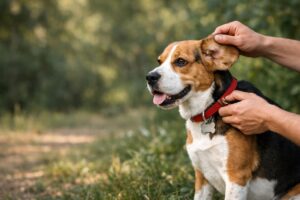

Tyler started shivering out of nowhere one afternoon. No cold weather, no reason I could see. A CBC blood test confirmed his platelet count had dropped because of tick fever. He spent 4-5 days on a glucose drip with daily injections, followed by medication to bring his platelets back up. By day 7-8, he was back to his usual self. If your dog is showing even one odd symptom, don’t wait. Tick fever moves fast, and catching it early can save your dog’s life.
It happened on an ordinary afternoon, about six months ago.
Tyler was standing in the middle of the room. Not sleeping, not asking for food, not trying to steal something off the counter. He was just standing there, shivering.
It wasn’t cold. The weather was fine. There was nothing I could think of that would make him shake like that. But something in my gut told me this wasn’t normal Tyler behaviour. This wasn’t a dream-shiver or a “I just woke up” tremble. It was different.
I didn’t wait to see if it passed. I called my vet and took Tyler in the same day. And I’m really glad I did. His CBC test came back showing a significant drop in platelet count. My dog had tick fever.
Here’s everything that happened, what I learned, and what I’d tell any beagle owner going through the same thing.
What Is Tick Fever in Dogs?
Tick fever is not one single disease. It’s an umbrella term for a group of serious infections passed through tick bites. The two most common types in India are Babesiosis and Ehrlichiosis. Babesiosis attacks red blood cells. Ehrlichiosis attacks white blood cells and platelets. Both can turn dangerous fast if not caught early.
India’s tropical climate makes it especially fertile ground for ticks, which means tick fever is something every dog owner here needs to know about.
The tricky part is timing. Symptoms can take anywhere from 1 to 3 weeks to show up after an infected tick bite, and the signs are often vague. By the time a dog looks obviously sick, the infection has usually had time to do real damage.
The one thing that gave me hope when I looked into the numbers: research suggests that around 90% of dogs who get tick fever survive when treated promptly. That 10% on the other end is a serious reminder of why timing matters.
How Did I Know Something Was Wrong With Tyler?
I didn’t have a checklist. I just noticed Tyler wasn’t right.
The shivering was the only sign I saw. He wasn’t vomiting. He wasn’t refusing food (Tyler never refuses food, so that would have really alarmed me). He wasn’t limp or unresponsive. Just standing there, trembling quietly.
I think a lot of owners might have waited to see if it passed. I almost talked myself into that too. But something about the way he was shivering felt off. It wasn’t dramatic. It was subtle. And that subtlety is actually what scared me more.
I’ve learned since then that body shivering can be one of the early signs of tick fever, particularly when the infection is causing the body to fight back. Other common early symptoms include lethargy, loss of appetite, and fever that can reach up to 105°F or higher. Tyler didn’t show most of those at the time. Just the shiver.
That one sign was enough for me to go to the vet. And it turned out to be the right call.
How Is Tick Fever Diagnosed in Dogs?
The go-to test for tick fever is a CBC (Complete Blood Count). It looks at red blood cells, white blood cells, and platelets. A drop in any of these can point your vet toward a tick fever diagnosis. A normal platelet count in dogs sits between 175,000 and 500,000 per microliter of blood. When that count falls significantly, the body struggles to stop bleeding even from minor injuries.
In Tyler’s case, the CBC showed a clear drop in platelet count. My vet looked at the results and suspected tick fever straight away. Tick-borne infections like Ehrlichiosis, Anaplasmosis, and Babesiosis are known causes of this kind of platelet drop in dogs.
One thing I didn’t know at the time: vets will sometimes start antibiotic treatment before test results come back, because any delay can increase the risk of a severe or fatal outcome. They don’t wait around when tick fever is on the table. That urgency told me everything I needed to know about how serious the situation was.
What Does Tick Fever Treatment Actually Look Like?
For Tyler, treatment was 4-5 days of intensive care. A glucose drip to keep him hydrated, several injections each day, and then oral medication afterward to bring his platelet count back up. Supportive care alongside antibiotics is standard: fluid therapy, pain management, and nutritional support to help the body recover.
I won’t pretend that was an easy few days. Watching Tyler hooked up to a drip, not fully his bouncy self, was genuinely difficult. He looked at me with those big beagle eyes like he was asking me what was happening. I didn’t have a great answer.
The important thing is to follow the full course of treatment, even when your dog starts looking better. Don’t stop early.
What My Vet Told Me Not to Do During Recovery
This was the instruction I hadn’t expected: no long walks, no strain on Tyler during recovery.
My vet was clear about it. With platelet counts still recovering, physical exertion carries real risk. Exercise during recovery can cause excessive bruising from rough play or movement, and can worsen pain from swollen or stiff limbs. Patients with low platelets should be kept at rest to avoid making any bleeding tendencies worse.
The challenge with this advice is that Tyler is a beagle. Beagles are not rest enthusiasts. He was looking at me, tail going, ready for his usual walk, and I had to say no. Every single day during that recovery week, he gave me the full beagle guilt trip. Nose on my leg, sad eyes, dramatic flop onto the floor.
I held firm. And he was fine. But it wasn’t easy for either of us.
How Long Did Tyler Take to Recover?
Since we caught the tick fever early and his case wasn’t severe, Tyler’s recovery took around 7 to 8 days from the start of treatment to getting back to his normal self. Dogs diagnosed and treated early generally recover well with few complications.
The first couple of days were the quietest I’ve ever seen him. He wasn’t interested in playing, barely moved around the house, and slept a lot more than usual. By day 3 and 4, he started eating with more interest. By day 5 or 6, the real Tyler started coming back. Tail wagging, sniffing at the back door, looking at his lead.
I didn’t take him for a proper walk until my vet gave me the all-clear. Tyler was one of the lucky ones. Not because luck was the deciding factor, but because we went to the vet the same day I noticed that shiver.
How to Prevent Tick Fever in Your Dog
After going through this with Tyler, I became a lot more serious about prevention. Here’s what I do now.
- Tick check after every walk: ears, head, neck, groin, toes, and armpits
- Vet-recommended tick prevention product year-round
- Keep Tyler’s bedding and sleeping area clean and washed weekly
After walks, check your dog’s entire body, paying close attention to the ears, head, neck, groin, toes, and armpits. These are the spots ticks like to hide. It takes a couple of minutes and it’s worth doing every single time.
Keep up with vet-recommended tick prevention products. Some tick-borne diseases can transmit in as little as 3-6 hours, while others like Lyme take 24-48 hours, so finding and removing ticks quickly after every walk makes a real difference regardless of which prevention you use.
None of this is complicated. The hard part is doing it consistently.
Conclusion
I think about that afternoon a lot. Tyler standing in the middle of the room, just shivering. I could have told myself it was nothing. Waited until the next morning. Given it another day.
I didn’t, and that made all the difference.
- Act fast: go to the vet the same day you notice something off
- Ask for a CBC test if your vet hasn’t suggested one
- Follow the full treatment plan, don’t stop early
- Rest is as important as medication during recovery
- Tick prevention after recovery is non-negotiable
Tick fever is scary. But it’s treatable. And when you catch it early, your dog can come out the other side just fine. Tyler certainly did. He’s back to stealing socks and demanding extra dinner, which I’m choosing to see as a full recovery.
You may also like my this artilce about How My Beagle Changed My Life: Stress, Fatherhood & the Power of a Dog