
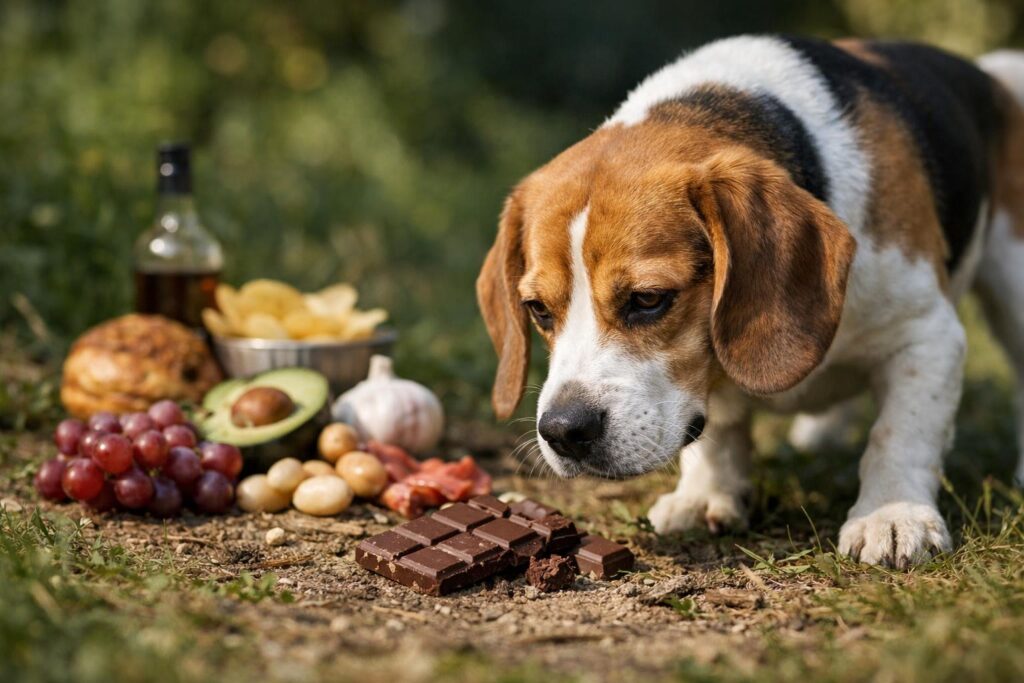
TL;DR: Several common household foods can be dangerous or even fatal to beagles. The biggest ones to know are chocolate, xylitol, grapes and raisins, onions and garlic, macadamia nuts, and avocado. Some cause kidney failure, some crash blood sugar within minutes, and some destroy red blood cells. If your beagle eats any of these, don’t wait. Call your vet or the ASPCA Poison Control line at (888) 426-4435 right away.
Beagles are one of the most food-driven breeds out there. They eat fast, they eat everything, and they don’t stop to think about whether something is safe. That combination makes it especially important for beagle owners to know which foods are dangerous, not just unhealthy but genuinely toxic.
Some of the foods on this list are well known. Others show up in everyday products most people would never suspect. This guide covers the ones that matter most, why they’re dangerous, and what to do if your beagle gets into any of them.
Why Beagles Are Especially at Risk
Beagles were bred as scent hounds. Their entire world is organized around smell, and food smells are irresistible to them. Unlike some breeds that eat cautiously or leave food in their bowl, beagles tend to eat fast and eat anything within reach.
That food obsession is part of the breed’s wiring. If you’ve ever wondered why your beagle acts like it hasn’t eaten in days even right after a meal, the science behind beagle food obsession explains exactly what’s going on in their brain.
The point is, you can’t rely on a beagle to avoid a dangerous food on its own. Keeping harmful foods out of reach is the only reliable strategy. Knowing what’s on the list is the first step.
Chocolate: The One Most People Know About (But Still Underestimate)
Chocolate is toxic to beagles because it contains a compound called theobromine. Dogs cannot break down theobromine the way humans do, so it builds up in their system and causes serious harm. The darker the chocolate, the higher the theobromine content and the greater the risk.
Cornell University College of Veterinary Medicine explains that toxicity depends on the type of chocolate and the size of the dog. Cocoa powder and baking chocolate are the most dangerous, followed by dark chocolate, then milk chocolate. White chocolate contains very little theobromine but is still best avoided.
Symptoms usually appear within 2 to 12 hours of eating chocolate and can include:
- Vomiting and diarrhea
- Restlessness and excessive thirst
- Rapid or irregular heartbeat
- Muscle tremors and seizures
Many people assume a small piece of milk chocolate isn’t a big deal. It might not cause severe symptoms in a larger dog, but a beagle is a small to medium breed, and the dose that causes harm is lower than most owners expect. If your beagle eats any amount of chocolate, contact your vet or the ASPCA Animal Poison Control Center at (888) 426-4435. Don’t wait for symptoms to appear.
Xylitol: The Hidden One That Scares Vets the Most
Xylitol is an artificial sweetener found in sugar-free gum, some peanut butters, baked goods, chewable vitamins, mouthwash, and human toothpaste. In dogs, it triggers a massive and rapid release of insulin, causing blood sugar to crash within 30 minutes of eating it. Higher doses cause liver failure.
The U.S. Food and Drug Administration has issued a specific warning about xylitol and dogs, noting that symptoms including vomiting, weakness, staggering, collapse, and seizures can appear very quickly after ingestion. Deaths have been reported.
The Merck Veterinary Manual reports that doses above approximately 100 mg per kilogram of body weight cause hypoglycemia in dogs, and doses above 500 mg per kilogram can cause severe liver failure. To put that in context, a single piece of some xylitol-sweetened gums contains enough to be harmful to a small dog.
The tricky thing about xylitol is that it hides in products that seem harmless. Always read labels before giving your beagle anything that wasn’t made specifically for dogs. This is especially important with peanut butter, which is often used as a treat or to hide medication. Many brands are xylitol-free, but some are not. Check every time.
If your beagle eats anything containing xylitol, treat it as an emergency. Call your vet immediately. Do not try to induce vomiting unless directed by a vet, as it can make things worse.
Grapes and Raisins: Small Amount, Big Danger
Grapes and raisins can cause sudden kidney failure in dogs. What makes them especially dangerous is that even a very small amount can cause serious harm in some dogs, and scientists still don’t fully understand the exact mechanism.
The American Kennel Club notes that grapes and raisins are among the most toxic foods for dogs, with some animals being more sensitive than others. The problem is you can’t predict which dogs will react severely and which won’t. The safest approach is to treat all grapes and raisins as dangerous every time.
Raisins are easy to miss because they show up in so many foods: trail mix, granola bars, cereal, fruit cake, and certain breads. Always check what’s in a snack before it ends up anywhere near your beagle.
Symptoms of grape or raisin poisoning include:
- Vomiting and diarrhea, often within a few hours
- Lethargy and loss of appetite
- Decreased urination or no urination at all
- Abdominal pain
If you know or even suspect your beagle ate grapes or raisins, call your vet right away. Early treatment makes a real difference in outcomes.
Onions, Garlic, and the Allium Family
All vegetables in the allium family are toxic to dogs. This includes onions, garlic, leeks, chives, and shallots, in every form: raw, cooked, powdered, and dehydrated. These foods contain compounds called thiosulfates that damage red blood cells in dogs, reducing their ability to carry oxygen through the body. The result is a condition called hemolytic anemia.
Garlic is the most potent member of the allium family and is considered roughly five times more toxic than onion for dogs. One of the most dangerous aspects of allium toxicity is that symptoms can take several days to appear after eating them. By the time you notice something is wrong, the damage may already be significant.
Signs of allium poisoning include pale gums, weakness, rapid breathing, lethargy, and collapse. If your beagle has eaten food containing onion powder or garlic powder, which are concentrated forms found in many seasoned dishes and baby food, contact your vet even if your dog seems fine.
Many owners accidentally feed alliums to their dogs through table scraps. Stews, curries, stir-fries, and seasoned meats often contain onion or garlic in amounts that are genuinely harmful to a beagle-sized dog.
Other Foods Worth Knowing About
The foods above are the most critical ones to know. But there are several others that beagle owners should keep away from their dogs.
Macadamia nuts: Even a small number of macadamia nuts can cause vomiting, fever, muscle weakness, and difficulty walking in dogs. The exact toxic mechanism is not yet understood, but the effects can be severe. Trail mixes, cookies, and baked goods often contain macadamia nuts.
Avocado: Avocado contains a substance called persin, which is toxic to dogs in large amounts and can cause vomiting and diarrhea. The pit is also a choking and obstruction hazard. While small amounts of avocado flesh may not cause serious harm, it’s best to keep it away from your beagle entirely.
Raw yeast dough: Unbaked dough can expand inside a dog’s stomach, causing painful bloating and potentially life-threatening stomach torsion. As the yeast ferments, it also produces alcohol, which adds another layer of toxicity.
Cooked bones: Cooked bones splinter easily and can cause choking, internal punctures, and digestive blockages. Raw bones carry a lower splintering risk but still pose a hazard depending on the type and size. When in doubt, skip bones altogether and opt for vet-approved chews.
Alcohol: Alcohol affects a dog’s liver and brain the same way it does in humans, but the doses required to cause serious harm are much smaller. Even food made with alcohol, like certain desserts or marinades, can be dangerous. Never give alcohol to a beagle in any form.
Salty and heavily seasoned foods: Too much salt can cause excessive thirst, urination, vomiting, diarrhea, and in serious cases, sodium poisoning. Chips, pretzels, and heavily seasoned table scraps should stay away from your beagle’s bowl.
Caffeine: Coffee, tea, energy drinks, and certain medications contain caffeine, which is toxic to dogs. It can cause rapid heart rate, tremors, seizures, and in high doses, death. Keep coffee grounds, tea bags, and caffeine-containing drinks well out of reach.
What to Do If Your Beagle Eats Something Toxic
The most important thing to know is this: don’t wait for symptoms. By the time symptoms appear for some of these toxins, the damage is already happening inside your dog’s body.
Here’s what to do:
- Note what they ate and how much. If there’s a wrapper or packaging, keep it. The vet will need to know the product name, ingredients, and approximate quantity.
- Call immediately. Contact your vet or the ASPCA Animal Poison Control Center at (888) 426-4435. This line is available 24 hours a day.
- Don’t try to induce vomiting on your own. For some toxins, like xylitol, inducing vomiting can make things worse if the dog is already hypoglycemic. Only do this if your vet tells you to.
- Keep your beagle calm and still. Stress and exercise can speed up how quickly some toxins are absorbed.
- Make sure they have access to water. Hydration matters during any illness or poisoning event. You can read more about how much water a beagle needs and why it matters in this beagle water requirements guide.
Time is the biggest factor in how well a dog recovers from food poisoning. The earlier treatment starts, the better the outcome in almost every case.
Wrapping Up
Beagles are not going to self-regulate around food. That’s just not how the breed works. The only reliable protection is knowing which foods are dangerous and making sure they stay completely out of reach.
The foods covered in this post, especially chocolate, xylitol, grapes, raisins, and the allium family, are genuinely life-threatening in the wrong amounts. Keep them secured, check labels before sharing anything with your beagle, and never assume a small amount is harmless.
If something does go wrong, act fast. The ASPCA Animal Poison Control line at (888) 426-4435 is always available, and early intervention is almost always the difference between a close call and a serious outcome.
Frequently Asked Questions
What foods are toxic to beagles?
The most dangerous foods for beagles include chocolate, xylitol (an artificial sweetener found in sugar-free products), grapes and raisins, onions and garlic, macadamia nuts, avocado, raw yeast dough, alcohol, and caffeine. Some of these cause kidney failure, some crash blood sugar levels, and some damage red blood cells. All of them can be life-threatening in the wrong amounts and should be kept away from beagles entirely.
My beagle ate chocolate. What should I do?
Call your vet or the ASPCA Animal Poison Control Center at (888) 426-4435 right away. Don’t wait for symptoms to appear. Note the type of chocolate, how much was eaten, and your beagle’s weight. Dark chocolate and baking chocolate are the most dangerous, but milk chocolate can also cause harm depending on the amount. Early treatment significantly improves the outcome.
Is peanut butter safe for beagles?
Plain, unsalted peanut butter without xylitol is generally safe for beagles in small amounts. The problem is that some brands now use xylitol as a sweetener, which is extremely toxic to dogs. Always read the ingredient label before giving any peanut butter to your beagle. Look specifically for xylitol, birch sugar, or wood sugar in the ingredients list. If any of those appear, do not use it.
Can beagles eat grapes or raisins?
No. Grapes and raisins are toxic to dogs and can cause sudden kidney failure. Even a small amount can be dangerous, and some dogs are more sensitive than others. There’s no safe threshold. Raisins in particular are easy to miss because they’re found in trail mixes, cereals, granola bars, and baked goods. If your beagle eats any grapes or raisins, contact your vet immediately.
How quickly do food poisoning symptoms show up in beagles?
It depends on what was eaten. Xylitol can cause symptoms within 30 minutes. Chocolate symptoms usually appear within 2 to 12 hours. Grape and raisin poisoning may take a few hours to show signs but can cause kidney failure within 24 to 72 hours. Allium toxicity from onions and garlic can take several days to show up. Because symptoms are sometimes delayed, you should call your vet immediately after any suspected ingestion rather than waiting to see if your beagle seems unwell.