TL;DR: Brushing your beagle’s teeth is one of the most important things you can do for their health. The key is going slow. You don’t start with a toothbrush on day one. You spend the first week just getting them used to having their mouth touched. Tyler hated it at first too. This guide walks you through the exact steps I used, plus answers the question most owners have: is it okay if your beagle swallows the toothpaste?
The first time I tried to brush Tyler’s teeth, he looked at me like I had completely lost my mind.
He shook his head. He backed away. He squirmed out of my grip three times before I even got the brush near his mouth. I gave up after about 30 seconds, sat on the floor, and wondered if this was just something beagles refused to do.
Turns out, I was doing it wrong. Not the brushing part. The whole approach.
Here’s what I didn’t know then: beagles are actually more prone to dental problems than a lot of other breeds. That means skipping dental care isn’t really an option for us beagle owners. And once I understood what was actually at stake, I figured out how to make it work with Tyler.
This is the guide I wish I had on day one.
Why Beagles Really Need Their Teeth Brushed
Beagles are more likely to develop dental disease than many other dog breeds. It starts early, and it can cause serious problems if it goes unchecked. Studies show that 80 to 90 percent of dogs over age three have some form of periodontal disease, and beagles tend to be on the worse end of that.
Dental disease doesn’t just mean bad breath. Bacteria from gum disease can travel into the bloodstream and damage the heart, liver, and kidneys. That’s not something I wanted to risk with Tyler.
The other thing worth knowing is how fast plaque moves. Plaque builds up in your beagle’s mouth around the clock. Within just three days, it starts to harden into tartar. Once it turns to tartar, brushing at home won’t remove it. Only a vet can do that. So brushing regularly is really your best shot at staying ahead of the problem.
Wait, Is It Okay If My Beagle Swallows the Toothpaste?
If you’re using dog toothpaste, swallowing a little is completely fine. Dog toothpaste is actually designed to be swallowed because dogs can’t spit. The concern is not the dog toothpaste. The concern is human toothpaste, which contains ingredients that are toxic to dogs and should never go anywhere near your beagle’s mouth.
I noticed this with Tyler early on. He’d swallow most of the paste during brushing and I started wondering if I was quietly poisoning him every night. So I looked into it.
Dog toothpaste is formulated to be safe to swallow. The worst that might happen with a lot of it is a little stomach upset. Enzymatic dog toothpaste specifically is designed for swallowing, and comes in flavors like chicken or peanut butter so dogs actually enjoy the taste.
Human toothpaste is a completely different story. It often contains xylitol, a sweetener that is perfectly safe for people but extremely dangerous for dogs. Xylitol causes a rapid spike in insulin in dogs, which can lead to life-threatening low blood sugar within 10 to 15 minutes of ingestion. Even small amounts are a serious risk. Fluoride, another common ingredient in human toothpaste, can also be toxic to dogs in large enough amounts.
So to answer the question: yes, Tyler swallowing dog toothpaste is fine. No, you should never use human toothpaste on your beagle.
What You Need Before You Start
You don’t need a lot. But what you pick does matter.
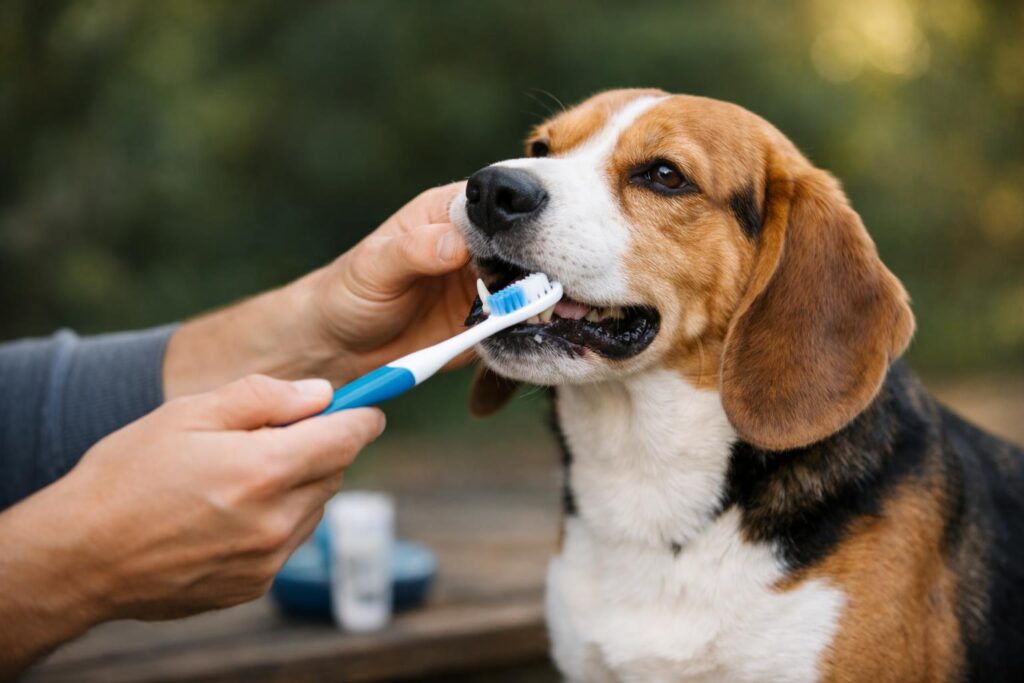
Toothbrush: A soft finger brush or a small-headed dog toothbrush both work well. Many beagles find a finger brush less threatening at first because it doesn’t look as scary as a regular brush. If your beagle hasn’t learned bite inhibition yet, go with the regular brush to be safe.
Toothpaste: Always use toothpaste made specifically for dogs. Look for enzymatic formulas, which contain natural enzymes that keep breaking down plaque even after you’ve finished brushing. Virbac C.E.T. is one of the most widely recommended by vets. Petsmile is the only dog toothpaste currently carrying the Veterinary Oral Health Council (VOHC) seal of approval for plaque control, which means it’s been tested and proven to work.
Flavor matters: Tyler does much better with a chicken flavor than anything minty. Most dogs find poultry or peanut butter flavors much more appealing. If your beagle refuses one flavor, try another. The right flavor can make a real difference.
How to Get Your Beagle Used to It (Step by Step)
The secret is going slower than you think you need to. Most people fail at this because they try to brush on day one. Your beagle isn’t ready for that. You need to build up to it, one small step at a time, over several days.
The process is called desensitization. You break the whole routine into tiny steps and pair each one with something your dog enjoys. Each step needs to feel easy and comfortable before you move to the next one.
Here’s how I did it with Tyler:
Days 1 to 3: Just touch the mouth. Put Tyler in a calm spot. Gently lift his lip and touch his teeth with your finger for a few seconds. Then reward with a treat and lots of praise. That’s the whole session. Do this two or three times a day. You’re not brushing anything yet. You’re just teaching him that having his mouth touched is no big deal.
Days 4 to 5: Introduce the toothpaste. Put a small amount of dog toothpaste on your finger and let your beagle lick it off. No brushing yet. You just want them to associate the toothpaste with something good. If they enjoy the flavor, that’s a great sign.
Days 6 to 7: Bring out the brush. Let them sniff it. Put a small amount of toothpaste on the brush and let them lick it. Don’t put it in their mouth yet. Just get them comfortable seeing and smelling the brush.
Day 8 onward: Start brushing. Lift the upper lip and start with the large front teeth. Use gentle circular motions where the teeth meet the gums. Keep the first session to just five or ten seconds. Reward heavily. Then slowly increase the time over the following days as your beagle gets more comfortable.
If your beagle pulls away or stiffens at any step, go back to the previous one. There’s no rush. Going back a step is not failing. It’s just the process.
How Long Did It Actually Take With Tyler?
Honestly? A few weeks before I felt like we were making real progress.
The first week was rough. Tyler wasn’t aggressive, but he was squirmy and uncooperative. He’d let me touch his mouth for about two seconds before shaking his head and walking off. I kept the sessions short and kept rewarding him, even when we didn’t get much done.
By the second week, he was licking the toothpaste off my finger without any fuss. That felt like a big win. Getting the actual brush in his mouth took another several days after that.
What finally clicked was switching to a chicken-flavored toothpaste. Tyler tolerated the previous flavor but didn’t love it. Once I switched, he started looking forward to the toothbrush. Not enthusiastically, but at least he stopped backing away.
Now he sits still for a full brushing most nights. He still sometimes turns his head at the end like he’s had enough. But we get through it. That’s a long way from day one.
If you’re in the early stages and it feels like nothing is working, stick with it. It really does get easier.
How Often Should You Brush and When?
Daily brushing is the goal. But even brushing every other day makes a meaningful difference. The key number to know is this: brushing less than every other day makes little to no difference in your beagle’s dental health. So you want to aim for at least every other day as a minimum.
Daily brushing is best because plaque forms constantly. The more often you break it up before it hardens, the better.
For timing, brushing after your beagle’s last meal of the day is ideal. It removes the food particles and bacteria that would otherwise sit on the teeth overnight. I brush Tyler’s teeth right after my own at night. Keeping them on the same schedule helps me remember.
Calmer dogs are also easier to work with, so if your beagle is full of energy at night, try brushing after a walk. A tired beagle is a much more cooperative beagle.
What If Your Beagle Still Refuses?
Some beagles take longer than others. And on some days, even a beagle that usually tolerates brushing just isn’t having it. That’s normal.
If your beagle truly won’t tolerate a toothbrush yet, there are some alternatives that can help in the meantime:
Dental wipes: These wrap around your finger and let you wipe plaque off the tooth surface without a brush. They’re not as effective as brushing but still better than nothing.
Dental chews: VOHC-approved dental chews have been tested and shown to reduce tartar buildup. They won’t replace brushing, but they support it.
Water additives: These go into your beagle’s drinking bowl and help reduce bacteria in the mouth. They’re a useful supplement when brushing isn’t possible.
Just keep in mind that all of these are supplements. They help, but they don’t do what regular brushing does. Keep working through the desensitization steps, even if progress is slow. Most beagles come around eventually.
If your beagle has red or swollen gums, strong bad breath that doesn’t go away, or seems uncomfortable when you touch their mouth, get them to a vet before continuing with brushing at home. Trying to brush teeth that are already inflamed can make your dog more resistant to the routine going forward.
Wrapping Up
Tyler still isn’t thrilled about teeth brushing. But he tolerates it. And that’s honestly all you need.
Here are the three things that made the biggest difference for us:
First, always use dog toothpaste. Never human toothpaste. The ingredients in human toothpaste can seriously harm your beagle, even in small amounts.
Second, go slow with the desensitization process. Skip steps and your beagle will resist. Follow them and you’ll get there.
Third, consistency beats perfection. A short brushing five times a week is better than one perfect session on Sunday.
If you want to go deeper on beagle dental health, including what gum disease actually looks like and which vet-approved products are worth using, check out our full beagle dental care guide.
And if you’re working through the rest of your beagle’s grooming routine, our beagle grooming guide covers everything from coat care to shedding in one place.
Frequently Asked Questions
Is it safe if my beagle swallows dog toothpaste?
Yes. Dog toothpaste is made to be swallowed because dogs can’t spit. A small amount is completely fine. The most that might happen with a larger amount is a little stomach upset. Just make sure you’re using dog toothpaste, not human toothpaste, which contains fluoride and xylitol that are toxic to dogs.
Can I use human toothpaste on my beagle?
No. Human toothpaste should never be used on dogs. It often contains xylitol, which causes dangerous drops in blood sugar in dogs and can be life-threatening even in small amounts. Fluoride is another ingredient in human toothpaste that can harm dogs. Always use toothpaste made specifically for dogs.
How do I brush a beagle’s teeth if they keep moving?
Start with very short sessions and reward your beagle immediately after. Work on desensitizing them to having their mouth touched before you even introduce the brush. Tired dogs are also calmer, so try brushing after a walk. If they pull away, go back to an earlier step in the desensitization process and build up again.
How often should I brush my beagle’s teeth?
Daily is best. If that’s not possible, aim for every other day at minimum. Brushing less often than every other day has little impact on dental health. The goal is to remove plaque before it has a chance to harden into tartar.
What are signs my beagle has a dental problem?
The most common signs are persistent bad breath, red or swollen gums, yellow or brown buildup on the teeth, and bleeding when you touch the gums. Your beagle might also avoid chewing on one side or seem sensitive when you touch their mouth. If you notice any of these, see your vet. Some dental disease can look fine on the outside while the real damage is happening under the gumline.