TL;DR: Beagles are more prone to ear infections than most breeds because their long, floppy ears trap moisture and block airflow. Regular cleaning every two to three weeks prevents most problems. The method is simple: vet-approved cleaner, cotton wool, and a gentle approach. Knowing what a healthy ear looks like means you will also catch problems early, which matters because ear infections in beagles rarely resolve on their own.
Note from Adrian: I am a beagle owner sharing what I have learned and what works for us with Tyler, not a veterinary professional. If you suspect your beagle has an ear infection, contact your vet. Do not attempt to treat it at home.
Tyler had his first ear infection when he was about two years old. I had not been cleaning his ears regularly, and honestly I did not realise I needed to. He started shaking his head more than usual and scratching at one ear, and when I lifted the flap I found exactly what I had been too casual to prevent: dark discharge, a noticeable smell, and one unhappy beagle.
That vet visit sorted it out, but it also changed how I think about ear maintenance entirely. We have had a consistent routine ever since and he has not had another infection. The difference was not complicated. It was just showing up regularly.
Why Beagles Need Their Ears Cleaned More Often Than Most Dogs
A beagle’s ears are one of the most distinctive things about the breed, and also one of their biggest maintenance requirements. Those long, heavy ear flaps fall directly over the ear canal, completely blocking airflow. Beagle Pro explains that this creates a warm, dark, moist environment inside the ear canal where bacteria and yeast thrive. It is not a design flaw so much as an unavoidable consequence of the ear shape the breed was developed with.
The problem compounds after baths, rainy walks, or any time your beagle gets their head wet. Moisture trapped under those ear flaps has nowhere to escape and takes a long time to dry out on its own. Vet Organics notes that prolonged moisture in the ear canal is one of the most common triggers for bacterial growth in beagles.
PetMD specifically lists beagles among the breeds at higher risk for ear infections, alongside other floppy-eared dogs like basset hounds and cocker spaniels. This is not a reason to panic, but it is a reason to be consistent.
What a Healthy Beagle Ear Looks Like
Before you start cleaning, it is worth knowing what you are aiming to maintain. A healthy ear should look pale pink inside, smell neutral or very faintly waxy, and have no visible discharge beyond a small amount of light-coloured wax. Hepper notes that a clean ear should look pink, not inflamed, and smell odourless.
If the ear looks red or swollen, has dark brown or black discharge, gives off a strong or yeasty smell, or your beagle is scratching at it repeatedly, that is not a cleaning job. That is a vet appointment. More on the signs to watch for below.
How Often Should You Clean a Beagle’s Ears?
For most beagles, a thorough clean every two to three weeks keeps things in order. Dogster recommends a quick surface clean weekly and a deeper clean every two to three weeks. A weekly check with a dog wipe just to clear surface dirt is quick and gives you a chance to spot anything unusual before it develops.
If your beagle swims regularly, gets bathed frequently, or has a history of ear problems, your vet may recommend cleaning more often. Cornell University College of Veterinary Medicine notes that dogs with floppy ears or a history of recurrent infections may need their ears cleaned every one to two weeks.
One important point: more is not always better. Over-cleaning can irritate the ear canal and actually increase the risk of infection by disrupting the natural balance of the ear. Hepper is clear that excessive ear cleaning can cause infections and irritation just as neglect can. Stick to a regular schedule rather than cleaning whenever you feel like it.
What You Need
You do not need much. The essentials are:
- A veterinary-approved dog ear cleaning solution
- Cotton wool balls or pads (not cotton buds)
- A towel
- Treats for rewarding your beagle throughout
Two things to avoid. Cotton buds (Q-tips) should never go into the ear canal. The AKC is emphatic: cotton-tipped swabs can push debris deeper into the ear canal, cause infections, and damage the inner structures of the ear. Cotton wool pressed gently with a finger is the safe alternative.
The second is hydrogen peroxide. It is a common household item and sounds like it should help, but the AKC warns that hydrogen peroxide irritates healthy ear tissue and extended use can damage the ear itself. Stick to solutions formulated specifically for dogs.
How to Clean a Beagle’s Ears: The Routine That Works for Us
After Tyler’s infection cleared, I asked the vet to walk me through the cleaning method properly rather than just figuring it out myself. This is what I have been doing since, and it follows the same approach recommended by Cornell and the AKC.
Step 1: Wait for a calm moment. Tyler gets his ears cleaned after his evening walk when he has already had some exercise and is more settled. If your beagle is wound up and bouncing around, wait until they have calmed down. Trying to clean a hyper dog’s ears is asking for trouble.
Step 2: Check before you clean. Lift the ear flap and look. If everything looks pale pink and smells normal, you are good to proceed. If you see heavy dark discharge, redness, or swelling, put the cleaner down and call your vet instead.
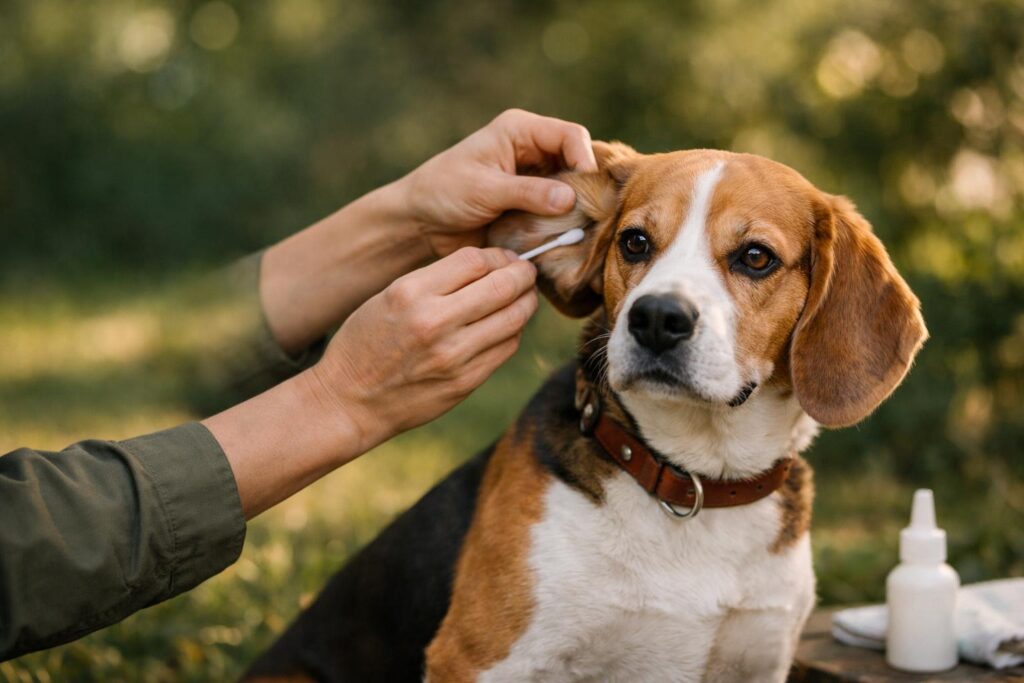
Step 3: Fill the ear canal with cleaner. Cornell recommends filling the ear canal with solution. Lift the ear flap, hold it gently, and squeeze the cleaner into the canal without letting the applicator tip touch the ear. If your beagle is resistant to liquid going in, you can saturate a cotton wool ball with the solution and use that instead.
Step 4: Massage the base of the ear. Fold the ear flap back down and gently massage the base of the ear for about 30 seconds. You should hear a slight squelching sound as the solution loosens the wax and debris inside. Tyler finds this bit quite pleasant and tends to lean into it.
Step 5: Let them shake. Have your towel ready and stand back. Most dogs will shake their head vigorously at this point, which is exactly what you want. It helps dislodge the loosened material and brings it up to the surface.
Step 6: Wipe out the ear. Using a cotton wool ball or pad, gently wipe out the visible part of the ear canal. Go no deeper than the depth of one knuckle. Cornell specifies starting from the inside and working outward, going only as deep as a finger can comfortably fit. Use a fresh piece of cotton wool for each wipe until it comes away clean.
Step 7: Repeat on the other side, then reward. Tyler gets a treat after each ear and another at the end. Keeping it positive means he tolerates it well and does not make it a battle.
After the clean, fold the ear flap back and let the ears air out for a few minutes before Tyler goes back to doing whatever he was doing. This is especially worth doing after a bath.
Signs of an Ear Infection to Watch For
Regular cleaning gives you an opportunity to notice problems early, which is one of the most valuable reasons to do it. Here is what to look out for:
- Head shaking more than usual, particularly if it keeps happening
- Scratching at one or both ears repeatedly
- A strong or unpleasant odour coming from the ear
- Dark brown, black, or yellow discharge inside the ear
- Redness or visible swelling inside the ear flap
- Your beagle tilting their head to one side
- Whining or pulling away when you touch the ear area
PetMD explains that yeast infections tend to produce a darker brown discharge with a distinct odour, while bacterial infections typically present with a lighter yellow or brown discharge. But distinguishing between them is your vet’s job, not yours. If any of the above signs are present, book the appointment rather than trying to treat it at home.
Ear infections in beagles rarely go away on their own. The AKC notes that quick treatment is necessary not just for your dog’s comfort but to prevent infection spreading to the middle and inner ear, which is significantly more serious. What starts as a routine outer ear infection can become a much bigger problem if it is left alone.
After Baths and Swimming
These are the two situations where ear attention is most important. After any bath, lift Tyler’s ear flaps and gently pat the visible outer ear dry with a towel before letting him shake. After swimming, the same applies, and I will do a full clean within a day or two rather than waiting for the next scheduled one.
Trapped moisture after water exposure is one of the most common routes to a beagle ear infection. A two-minute dry-out routine after every bath is genuinely worth building into the habit.
Conclusion
Tyler’s first ear infection was entirely preventable. I know that now. It was the result of me not knowing what to look for and not having a routine in place. The vet visit, the medicated drops, the fortnight of twice-daily treatment — all of it could have been avoided with a five-minute clean every couple of weeks.
He has not had another infection since we got consistent. The routine is the same every time: check, clean, reward, done. It takes less time than the walk we go on straight after. If you are not doing this yet, start simple: a quick lift-and-look every week, a proper clean every two to three weeks, and you will be in a much better position than I was before I learned the hard way.
For more on keeping your beagle healthy, the beagle health guide covers the other conditions worth understanding as an owner.
Frequently Asked Questions
Can I use water to clean my beagle’s ears?
Plain water is not recommended. It can introduce more moisture into the ear canal without having any cleaning or drying effect, which is the opposite of what you want. The AKC recommends sticking to a veterinary-formulated ear cleaner rather than DIY solutions, as these are designed to both clean and help the ear dry out properly after use.
My beagle hates having his ears touched. What should I do?
Start well before you need to clean. Spend a few days simply touching and gently massaging around Tyler’s ears during cuddle time, offering treats throughout. The goal is to make ear handling feel normal and unremarkable before you introduce any products. iHeartDogs recommends never forcing the process, as that creates negative associations which make every future session harder. If your beagle is extremely resistant and it is affecting their welfare, a groomer or vet can demonstrate the technique or do it for you until you both find a way to manage it at home.
How do I know if my beagle’s ear needs cleaning or treating?
A clean ear looks pale pink, smells neutral, and has at most a light amount of pale wax. An ear that needs cleaning may have a build-up of darker wax or a faint smell. An ear that needs treating will have a strong or unpleasant odour, dark or coloured discharge, visible redness or swelling, or your beagle will be showing signs of discomfort such as head shaking or repeated scratching. If you are in doubt, a vet check will answer the question in minutes. It is always better to check than to clean an ear that is already infected.
How do I dry my beagle’s ears after a bath?
Lift each ear flap and use a dry towel to gently pat the outer ear and the area just inside the flap. Do not insert the towel into the ear canal. After patting dry, fold the ear back and give it a few minutes of airflow before putting it back down. If your beagle is prone to ear infections, a gentle ear cleaner with a drying agent used after every bath can help prevent moisture build-up.