TL;DR: Most beagles need a bath every four to six weeks. Bathing too often strips the natural oils from their coat and causes dry, irritated skin. The exact schedule depends on how active your beagle is, where they spend their time, and whether they have any skin sensitivities. When in doubt, use your nose. If they smell, it’s time.
Tyler makes his feelings about bath time very clear. The moment he hears the taps running, he’s suddenly unavailable. Found under the bed. Deeply asleep in a corner he has never used before. Urgently interested in something in the garden.
Getting a reluctant beagle into the bath is its own challenge, which is exactly why it helps to know you do not have to do it that often. Beagles have a short, dense double coat that is naturally quite good at repelling dirt. They need far less bathing than many owners assume.
How Often Is the Right Amount?
For most beagles, once every four to six weeks is the sweet spot. Dogster recommends this as the standard frequency, and it is consistent with what most beagle owners and groomers find works well in practice.
The reason you do not want to go more often than this is that beagles have sensitive skin. Hepper notes that bathing too frequently strips the natural oils from your beagle’s coat, which leads to dry, itchy skin and a duller coat over time. Those oils exist for good reason. They protect the skin and give the coat its natural water-resistance.
That said, four to six weeks is a guideline, not a rule. Your beagle’s lifestyle matters a lot.
What Actually Determines How Often Your Beagle Needs a Bath
Activity level and outdoor time. A beagle who spends most of their time indoors can comfortably go six to eight weeks between baths with regular brushing in between. A beagle who is out in fields and woods every day, rolling in things, and generally investigating everything they can find will need one more frequently. Very active outdoor beagles may need a bath every three to four weeks just to stay on top of the dirt and odour.
Skin sensitivity. Some beagles have particularly sensitive or dry skin. If yours does, bathing less frequently is actually better, and using a gentle, soap-free shampoo when you do bathe them helps avoid irritation. All About Beagles recommends a hypoallergenic shampoo with naturally derived ingredients and no parabens, dyes, or artificial fragrances for beagles with sensitive skin.
The season. During heavy shedding periods in spring and autumn, a bath can help loosen dead fur and reduce the amount of hair landing on your furniture. This is one situation where an extra bath between your usual schedule makes practical sense.
What they rolled in. If your beagle has come home smelling like something they should not have found, that bath is happening regardless of where you are in the schedule. No guidelines survive contact with whatever Tyler once found near the edge of the park.
Between Baths: How to Keep Them Reasonably Fresh
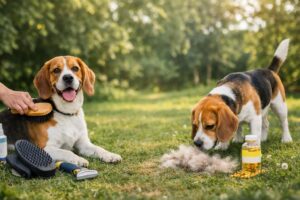
The good news is that a lot of day-to-day maintenance does not require a full bath at all. A quick brush a couple of times a week removes loose hair, distributes the coat’s natural oils, and shifts surface dirt before it has a chance to bed in. If your beagle’s paws are muddy, let the mud dry and brush it out rather than reaching for the shampoo.
Dog wipes or a damp cloth are also genuinely useful for spot cleaning between baths. Paws after a walk, a dirty muzzle after a meal, or anything that smells slightly suspicious can usually be handled without making your beagle disappear under the bed.
A Few Things to Get Right When You Do Bathe Them
Since you are only doing this every few weeks, it is worth doing it properly. A few things that make a real difference:
Brush first. Getting rid of loose fur and any tangles before the water goes on makes the whole process cleaner and quicker.
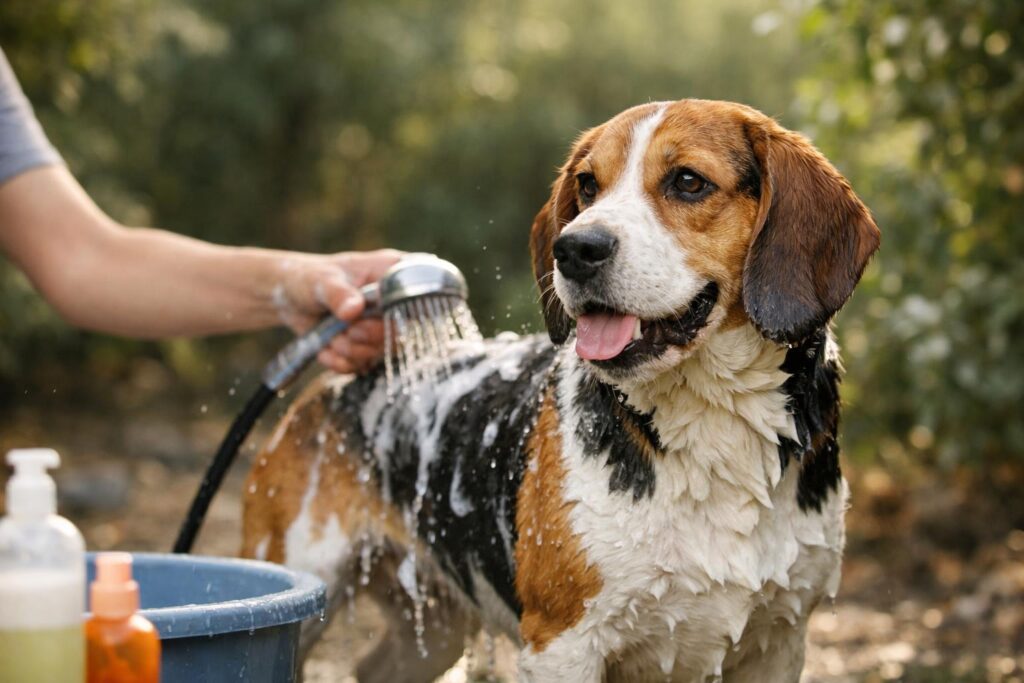
Use lukewarm water. Not hot. Beagles are small dogs with relatively sensitive skin, and water that feels comfortable to you might be too warm for them. Lukewarm is the right call.
Rinse thoroughly. This is the step most people underestimate. Shampoo residue left in the coat is a common cause of itching and skin irritation after baths. All About Beagles notes that rinsing until the water runs completely clear takes more time than most people expect, but it matters.
Keep the ears dry. Beagles are already prone to ear infections because of their long, floppy ears that restrict airflow. Getting water into the ear canal during a bath and not drying it out properly is a fast route to a problem you do not want. Use a damp cloth on the outer ear, keep the shower head away from the ears, and dry them gently but thoroughly afterward.
Dry them properly. A damp beagle left to air dry can get cold and is more likely to roll in the first interesting thing they find outside. A quick towel dry followed by a low-heat blow dry (if your beagle tolerates it) or a warm, draft-free spot to dry off in works well.
Tyler’s Bath Strategy
Given that Tyler treats bath time as a personal injustice, we have learned to make it as quick and low-drama as possible. A treat trail leading to the bathroom. Warm water ready before he arrives so there is no waiting around. Chicken-flavoured distractions during the rinse. And a good towel dry followed immediately by a walk, which he loves and which gives him something to look forward to at the end of it.
It works, mostly. He still goes very still in that particular way that means he is deeply displeased. But he gets through it, and with a four to six week gap between sessions, so does everyone else.
Conclusion
Every four to six weeks for most beagles, less often if they have dry or sensitive skin, more often if they are very active outdoors or have had a particularly eventful walk. Weekly brushing in between, spot cleaning where needed, and a good thorough rinse when you do bathe them. That is genuinely all it takes to keep a beagle’s coat in good shape.
If you want to read more about keeping your beagle’s coat and skin healthy, the article on beagle grooming basics covers everything from brushing frequency to ear cleaning in one place.
Frequently Asked Questions
Can I bathe my beagle more than once a month?
You can, but it is worth being careful about how you do it. Bathing more frequently than every four weeks with a standard shampoo risks stripping the coat’s natural oils and causing dry, itchy skin. If you need to bathe your beagle more often, because they visit a dog daycare, spend a lot of time outdoors, or just get dirty regularly, switch to a gentle soap-free or moisturising shampoo. Hepper recommends using a gentle cleansing shampoo if washing more frequently than usual to avoid skin irritation.
What shampoo is best for beagles?
A gentle, pH-balanced dog shampoo without harsh detergents, artificial fragrances, or parabens is the right starting point for most beagles. For dogs with dry or sensitive skin, look for formulas with soothing ingredients like oatmeal or aloe vera. Always use dog-specific shampoo rather than human products. The pH of human shampoo is not suitable for dog skin and can cause irritation even if used occasionally.
My beagle smells bad between baths. What can I do?
Beagles do have a distinctive scent, which is part of the breed. If the smell is stronger than usual between baths, regular brushing helps by distributing coat oils and removing debris. Dog-specific dry shampoo or deodorising spray can freshen them up without a full wash. If the smell is coming specifically from the ears rather than the coat, check for signs of an ear infection, as this is a common issue in the breed. Persistent or unusual odour is worth mentioning to your vet at the next check-up.
Should I bathe a beagle puppy differently?
Dogster advises waiting until a beagle puppy is at least ten weeks old before their first bath. After that, the same four to six week guideline applies, but use a puppy-specific shampoo which is formulated to be gentler on young skin. Keep the first few baths short and positive, with lots of praise and rewards, so bath time does not become something they dread as they get older.