TL;DR: Cherry eye and dry eye are two of the most common eye conditions in beagles, and they are more connected than most owners realise. Cherry eye is a prolapse of the third eyelid’s tear gland and is almost always treated with surgery. Dry eye is a chronic shortage of tear production that can follow untreated or poorly managed cherry eye. Neither is an emergency, but both need a vet’s attention sooner rather than later. This guide covers what each condition looks like, what causes it, how it’s treated, and what happens if it’s left alone.
Medical Disclaimer: This article is written by a beagle owner for informational purposes only. It is not a substitute for professional veterinary advice, diagnosis, or treatment. If you notice anything unusual about your beagle’s eyes, book an appointment with your vet. Eye conditions can progress quickly and are much easier to manage when caught early.
Eye problems weren’t something I spent much time worrying about when Tyler was young. Then I came across a photo in a beagle owners’ group of a dog with what looked like a small red cherry stuck in the corner of its eye. The comments were full of beagle owners saying “oh yes, we had that.” It turns out this is one of the most recognisable beagle health issues there is, and one that connects directly to a second condition that tends to show up later in life.
The more I read, the more I realised the two conditions, cherry eye and dry eye, are best understood together. One can cause the other, the treatment of one affects the risk of the other, and beagles are predisposed to both. Here’s what I learned.
What Is Cherry Eye and Why Are Beagles Prone to It?
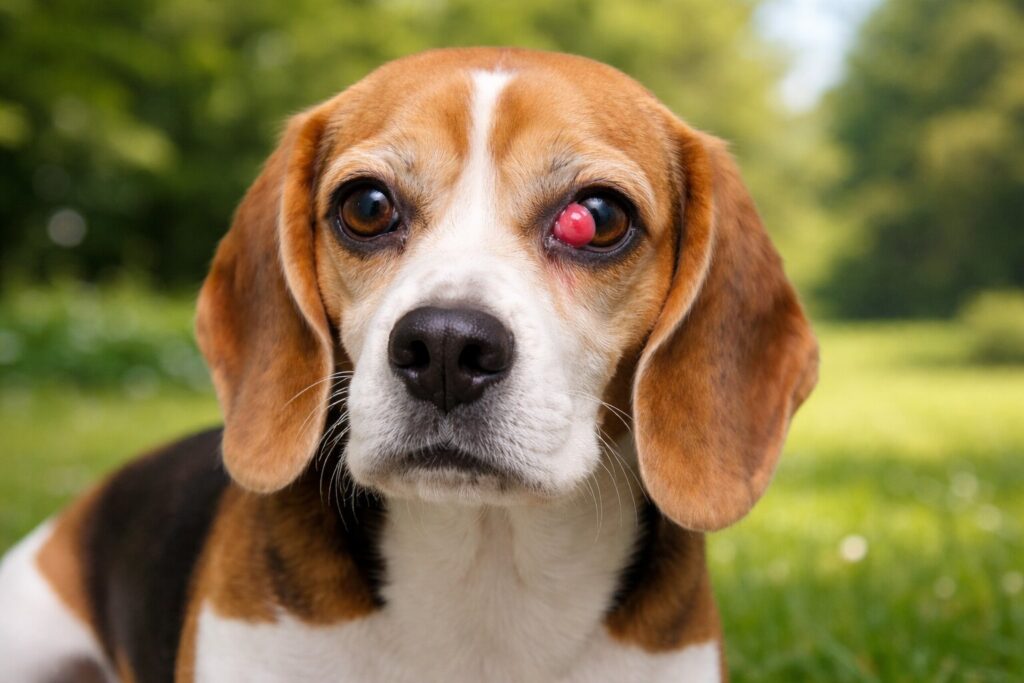
Cherry eye is the common name for a condition called prolapse of the third eyelid gland. To understand it, it helps to know that dogs, unlike humans, have three eyelids. The third eyelid, also called the nictitating membrane, sits at the inner corner of the eye and contains a tear-producing gland that is normally hidden from view. When the connective tissue holding that gland in place weakens, the gland slips out of position and protrudes visibly, creating a pink or red rounded mass at the corner of the eye. That’s the cherry.
Cornell University College of Veterinary Medicine explains that the exact cause of cherry eye is not fully understood, but genetics are clearly involved. Beagles are listed alongside English bulldogs, French bulldogs, cocker spaniels, pugs, and Boston terriers as breeds where the fibrous tissue anchoring the gland appears to be weaker than in other dogs. VCA Animal Hospitals confirms that beagles are among the most commonly affected breeds and notes that the condition appears most frequently in dogs under two years old.
A 2022 study of more than 900,000 dogs cited by the American Kennel Club found that dogs predisposed to cherry eye were typically under one year at diagnosis, and that purebred dogs had higher odds of developing the condition than mixed breeds, suggesting a hereditary component.
The condition usually starts in one eye, but VCA notes that many dogs with a prolapse in one eye will eventually experience one in the opposite eye. The gland may pop in and out initially before becoming permanently prolapsed.
What Does Cherry Eye Look Like and How Is It Diagnosed?
Cherry eye is one of those conditions that is hard to miss once you know what it is. The main signs are:
- A round, pink or red fleshy lump at the inner corner of one or both eyes
- Redness and swelling around the affected eye
- Eye discharge or watering
- Your beagle pawing or rubbing at their eye
- The mass appearing and disappearing at first, before becoming permanent
PetMD notes that cherry eye is not typically painful in the early stages, though the exposed gland becomes increasingly irritated and inflamed the longer it remains prolapsed. The condition is diagnosed by a vet on physical examination. Your vet may also run a Schirmer tear test to check whether the prolapsed gland has already affected tear production, and may use a fluorescein dye test to check for any corneal damage or ulcers.
While the appearance can be alarming, a board-certified veterinary ophthalmologist quoted by the AKC puts it plainly: “The biggest thing is to not panic about these. They look terrible, but they’re not emergencies.” That said, the advice is still to get it seen promptly, not to wait. The longer the gland is exposed, the more inflamed it becomes and the less well it functions.
Why the Third Eyelid Gland Matters So Much
This is the part of cherry eye that most owners don’t fully understand until they’re dealing with the consequences. The gland in the third eyelid is not decorative. It is responsible for producing a significant portion of the eye’s total tear film.
Different veterinary sources give slightly different figures for exactly how much of the tear film this gland produces. The American College of Veterinary Ophthalmologists (ACVO) states the gland is responsible for 33 to 66% of total tear production. VCA puts it at up to 50%. PetMD cites approximately 30%. Whatever the precise figure, it is clearly not a gland the eye can afford to lose.
This is why the treatment approach to cherry eye has changed significantly over the years. Veterinary Partner at VIN explains that historically it was common to simply remove the prolapsed glandular tissue, as it was seen as an easy fix. It is now understood that removing the gland places the dog at serious risk of developing dry eye (keratoconjunctivitis sicca, or KCS) for the rest of its life. This is why the recommended treatment today is always surgical repositioning, not removal. The goal is to put the gland back where it belongs and keep it there.
How Is Cherry Eye Treated?
The treatment for cherry eye is surgical, and it is almost always necessary. PetMD is clear that cherry eye will not resolve on its own. The gland may slip back temporarily, but it will prolapse again, and repeated prolapses cause increasing inflammation and reduce the gland’s function over time.
There are two main surgical techniques your vet may use:
The tacking method is the most common. A single permanent stitch draws the gland back into its correct position beneath the third eyelid and holds it there. It is relatively straightforward and has a good success rate.
The pocketing method involves creating a small pouch of nearby tissue to encase the gland and hold it in place with dissolvable stitches. It requires more specialist technique and equipment but is preferred by some veterinary ophthalmologists, particularly for recurrent cases.
Animal Vision Care reports an overall surgical success rate of approximately 90%, with a healing period of three to six weeks. After surgery, your beagle will typically be sent home with anti-inflammatory eye drops, antibiotic ointment, and an e-collar to prevent them rubbing the eye during recovery.
Recurrence is possible. VCA cites a re-prolapse rate of approximately 5 to 20% of cases, with recurrence more likely if the gland was inflamed for a long time before surgery, or if abnormal cartilage is also present in the third eyelid. If the gland re-prolapses, a second surgery is usually needed, sometimes using a combination of techniques for a more secure result.
One important note on timing: your vet may suggest waiting a few weeks before operating, particularly if there is any chance the second eye may be affected. The AKC notes that operating preventively on a healthy eye is not recommended, as surgery on an unaffected third eyelid can actually cause it to prolapse. But if the second eye prolapses while you are waiting, both eyes can be corrected at the same time under one anaesthetic.
What Is Dry Eye and How Does It Relate to Cherry Eye?
Dry eye, or keratoconjunctivitis sicca (KCS), is a chronic condition in which the eye’s tear production is insufficient to keep the cornea lubricated and healthy. The two conditions are connected in a very direct way: untreated or poorly managed cherry eye is one of the routes by which a beagle can develop dry eye. But KCS can also develop independently, and beagles can be affected by both at different stages of their lives.
Cornell University explains that the most common cause of KCS is immune-mediated inflammation of the tear-producing glands, in which the dog’s own immune system attacks the lacrimal tissue and progressively reduces its function. This form is poorly understood but has a clear breed predisposition. Other causes include nerve damage to the tear gland (neurogenic KCS), certain medications (particularly some sulfa-based antibiotics), hypothyroidism, and surgical removal of the third eyelid gland.
The link to cherry eye is significant: Veterinary Partner at VIN specifically notes that surgical removal of the third eyelid gland (rather than repositioning it) is a known cause of KCS. This is why it is so important that any vet treating cherry eye opts for repositioning, not removal. If you are ever told the gland needs to be removed, ask to be referred to a veterinary ophthalmologist for a second opinion.
Small Door Veterinary adds an important caveat: even successful cherry eye surgery does not fully eliminate the risk of KCS developing later. Dogs that have had prolapsed third eyelid glands should be monitored for dry eye for the rest of their lives, as the condition can develop years after treatment.
What Does Dry Eye Look Like in a Beagle?
KCS tends to creep up slowly, and its early signs are frequently mistaken for a simple eye infection. The most telling symptoms are:
- Thick, sticky, yellowish-green discharge from one or both eyes
- Red, inflamed-looking eyes
- Squinting or excessive blinking
- A dull, lusterless appearance to the cornea rather than its normal clear shine
- Your beagle rubbing or pawing at their eyes frequently
- In chronic cases: a dark film or pigmentation forming over the cornea
VCA describes a key diagnostic clue: if your beagle seems to have recurring conjunctivitis that clears up with antibiotics and then comes back, that pattern of repeated infection is often a sign of underlying KCS rather than a simple bacterial problem. The discharge in dry eye is thick and mucoid because without adequate watery tears, the eye produces excess mucus as a substitute.
In advanced or untreated KCS, the cornea can develop scarring, blood vessel in-growth (neovascularisation), and dark pigment deposits. A peer-reviewed paper published in Veterinary Medicine: Research and Reports notes that in severe cases, KCS can lead to corneal perforation and permanent vision loss, which underscores why early detection and consistent treatment matter so much.
How Is Dry Eye Diagnosed and Treated?
Diagnosis is straightforward. The Schirmer tear test (STT) is the standard diagnostic tool and takes only a minute in the consulting room. A small strip of absorbent paper is placed under the lower eyelid and measures how many millimetres of tear film are produced in 60 seconds. Cornell states that normal tear production in dogs is above 15mm per minute. Results below this threshold, combined with the clinical signs above, confirm a KCS diagnosis. Your vet may also use fluorescein stain to check for corneal ulcers at the same appointment.
Treatment has two goals: stimulate the eye to produce more of its own tears, and supplement with artificial tears to protect the cornea in the meantime.
Cyclosporine (available commercially as Optimmune) and tacrolimus are the two main immunomodulating eye drops or ointments used to treat KCS. VCA describes these as generally very safe medications that suppress the immune destruction of the tear glands and restore natural tear production in the majority of dogs. Most dogs show improvement within a few weeks of starting treatment. Both medications are typically applied once or twice daily.
The ACVO notes that treatment needs to be administered daily for the rest of the dog’s life. KCS is a chronic condition. It does not resolve on its own and does not stay managed if medication is stopped. This is perhaps the most important thing to understand going into a KCS diagnosis: you are committing to a daily eye drop routine indefinitely.
For dogs that do not respond adequately to medication, a surgical procedure called parotid duct transposition is available. Cornell explains that this procedure reroutes the salivary duct to the eye, providing salivary moisture as a substitute for tears. It is typically performed by a veterinary ophthalmologist and is reserved for severe cases unresponsive to medical management.
The prognosis for well-managed KCS is good. The ACVO states that with early diagnosis and consistent lifelong treatment, the prognosis can be excellent for long-term comfort and maintenance of vision. The key word there is consistent. Dogs whose KCS is managed well can live comfortably with the condition for years.
The Connection Between the Two: What Beagle Owners Should Keep in Mind
Cherry eye and dry eye are not the same condition, but they share a biological pathway that makes them worth understanding together, particularly if you own a beagle.
The tear gland in the third eyelid is involved in both. In cherry eye, that gland prolapses out of position. If it is left untreated for too long, or if it is removed rather than repositioned surgically, the eye loses a significant portion of its tear-producing capacity. That loss directly increases the risk of KCS. This is not a theoretical risk. It is a documented clinical outcome.
Additionally, beagles appear to have a general predisposition to eye conditions as a breed. Small Door Veterinary notes that breeds predisposed to cherry eye also tend to be predisposed to other ocular conditions, including dry eye, so the two conditions can develop independently in the same dog at different ages.
The practical takeaway for beagle owners is this: check your beagle’s eyes regularly. Know what cherry eye looks like, particularly in younger dogs. And if your beagle has a history of cherry eye surgery, ask your vet to perform a Schirmer tear test as part of routine check-ups, even years after the surgery, because KCS can develop long after treatment.
Conclusion
Neither cherry eye nor dry eye is a death sentence for your beagle’s vision, but both need proper veterinary attention. Cherry eye looks alarming but is highly treatable when caught early and managed correctly. Dry eye is a long-term condition that requires daily commitment from you as an owner, but with that commitment, most affected dogs live comfortably.
What I’d want any beagle owner to take away from this is the importance of not delaying. Cherry eye that sits untreated for weeks or months becomes harder to fix and more likely to compromise tear production. KCS that is caught at the start of presentation is far easier to control than KCS that has been progressing quietly for months while being treated as ordinary conjunctivitis.
If you notice any redness, discharge, pawing at the eyes, or anything that looks like a small pink lump in the corner of your beagle’s eye, get them seen by a vet. Eye conditions in dogs move faster than most owners expect. Early action always leads to better outcomes.
Frequently Asked Questions
Is cherry eye painful for beagles?
In the early stages, cherry eye is not typically painful. PetMD notes that the prolapsed gland does not usually cause pain initially, though it can cause discomfort and irritation as it becomes increasingly exposed and inflamed. The longer the gland remains prolapsed, the more irritated and swollen it becomes, and the more likely your beagle is to paw at the area and cause secondary injury. This is one reason to have it seen and treated promptly even though it is not a medical emergency.
Can cherry eye go away on its own without surgery?
No. PetMD is clear that cherry eye will not resolve without surgical intervention. The gland may appear to slip back into position temporarily, but it will prolapse again. Some owners try gentle massage to coax the gland back, and while this may work briefly, it does not address the underlying weakness of the connective tissue. The only lasting treatment is surgical repositioning. Delaying surgery increases inflammation, reduces gland function, and raises the risk of dry eye developing later.
Will my beagle definitely need daily eye drops for dry eye forever?
In the vast majority of cases, yes. The American College of Veterinary Ophthalmologists confirms that KCS requires daily lifelong administration of topical tear stimulant medication. The immune-mediated form, which is the most common, does not resolve on its own, and stopping treatment typically results in the condition returning and progressing. Most dogs tolerate the medication well and adapt to the routine. Cyclosporine and tacrolimus are generally safe for long-term use and effective for the majority of affected dogs.
How do I know if my beagle’s eye discharge is dry eye or something else?
The type of discharge is a useful clue. In dry eye, the discharge tends to be thick, sticky, and yellowish-green, because without adequate watery tears, the eye produces excess mucus. A watery or clear discharge is more typical of an allergic reaction or minor irritation. VCA notes that a key warning sign for KCS is recurrent conjunctivitis that clears up with antibiotics but keeps returning. Only a vet can confirm KCS with a Schirmer tear test, so if your beagle has any form of persistent eye discharge, a vet visit is the right call.
Can a beagle go blind from dry eye?
If left completely untreated, yes. Research published in a peer-reviewed veterinary journal confirms that in severe, unmanaged cases, KCS can progress to corneal ulceration, perforation, and permanent vision loss. However, this outcome is largely preventable with early diagnosis and consistent treatment. The ACVO states that with early and consistent lifelong management, the prognosis is excellent for long-term comfort and maintenance of vision. Blindness from KCS is a failure of management, not an inevitable outcome of the diagnosis.