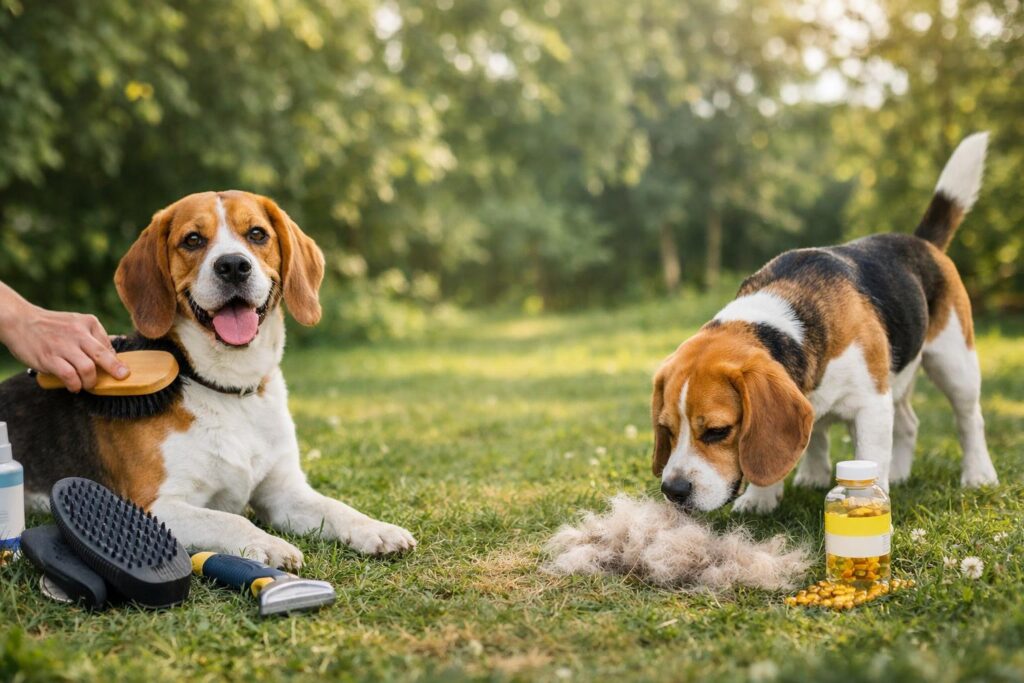
TL;DR: Beagles have a short double coat that sheds year-round, with two heavy seasons in spring and fall. The core routine is simple: brush 1-2 times a week with the right tools, bathe every 3-4 weeks with a dog-specific shampoo, and increase brushing to 3-5 times a week during peak shed periods. The wrong tools cause more harm than skipping altogether. Here is exactly what I do to keep Tyler’s coat healthy without it taking over my life.
The first time I brushed Tyler, I grabbed the slicker brush I had left over from a friend’s dog. Seemed fine. Tyler tolerated it for about two minutes, then started squirming every time the bristles hit his back. A week later his coat looked worse, not better, and the sofa had somehow acquired a second layer.
I had no idea beagles had a specific coat type that responds badly to certain tools. I assumed short hair meant easy grooming. It does not. It just means the grooming looks different. Once I understood what Tyler’s coat actually is and what it needs, the whole routine became straightforward. This guide covers everything I now do, why I do it, and what I wish I had known from the start.
What Kind of Coat Does a Beagle Actually Have?
Beagles have a double coat, not a single short coat. There is a soft, dense undercoat sitting close to the skin, and a coarser outer coat on top that is slightly water-repellent. The outer coat looks short and tidy. The undercoat is where most of the grooming work happens.
This matters because the two layers behave differently. The undercoat sheds dead hair that gets trapped between the layers instead of falling to the floor. If you do not remove it regularly, it blocks airflow to the skin and clogs pores. That is what causes the smell people notice in ungroomed beagles, not the dog being dirty.
One thing worth knowing: Tyler did not have a full double coat as a puppy. Beagles typically develop their adult double coat around one year old. Before that, grooming is mostly about building the habit rather than managing heavy shedding.
The Tools I Use on Tyler (And What I Avoid)
I keep three tools and use them at different times. That is it. No drawer full of specialist gadgets.
The first is a boar bristle brush. This is my weekly go-to. It removes loose surface hair, stimulates blood flow to the skin, and distributes natural oils through the coat. BeaglePro recommends boar bristle brushes specifically for beagles and I agree with that. Tyler actually leans into it, which tells me it feels good on his skin.
The second is a rubber curry mitt. I slip this over my hand and use it during baths and on days when Tyler has been outside and picked up dust or dirt. The rubber tips massage the skin while lifting surface debris. It also works well on dogs that wriggle during brushing because it feels more like being petted than groomed.
The third is a de-shedding tool, which I only bring out during heavy shedding season. It reaches the undercoat to pull out dead hair before it ends up on the floor. I use it sparingly, maybe once a week during spring, and put it away the rest of the year.
What I avoid: slicker brushes and aggressive de-shedding tools on a beagle’s everyday coat. A professional groomer on a dog forum put it clearly: slicker brushes reach straight through a beagle’s short outer coat to the skin. The wire bristles cause brush burn. I learned this the hard way in week one with Tyler. The signs are subtle but real: the dog starts avoiding the brush, the skin looks slightly red after sessions, and the coat starts looking duller instead of shinier.
How Often Should You Brush a Beagle?
For most of the year, brushing Tyler once or twice a week is enough to keep his coat healthy and reduce how much hair ends up on the sofa. During spring and fall shedding seasons, that increases to three to five times a week. Sessions do not need to be long. Five to ten minutes is enough to make a real difference when done consistently.
I always brush in the direction the coat grows, starting at the neck and working toward the tail. Brushing against the grain irritates the skin and pulls hair rather than lifting it. I clear the brush every couple of passes so it keeps working effectively.
If I skip brushing for more than two weeks, I notice it. The coat starts to look slightly flat and dull. More dead hair has had time to settle into the undercoat. It takes two or three sessions to get back on top of it rather than one quick pass.
When Do Beagles Shed the Most?
Beagles shed lightly all year but have two heavy shedding periods, one in spring and one in fall. Spring is the bigger of the two. This is triggered by changes in daylight hours, not temperature, which is why it happens even if you live somewhere warm. The body reads the longer days as a signal to shed the winter coat.
The first time Tyler went through a spring coat blow I was not prepared. The amount of hair coming off him during brushing was genuinely alarming. I thought something was wrong. It is called “blowing coat” and it is completely normal. It lasts roughly a month while the old coat is replaced.
One thing I noticed: because Tyler spends most of his time indoors, his shed cycles are not always perfectly aligned with the seasons. Indoor lighting and heating can shift the timing slightly. So I pay attention to how much hair is coming off during brushing rather than waiting for a calendar date to increase my routine.
Worth knowing: you cannot stop shedding and you should not try to. Shaving a beagle does not reduce shedding and actually damages the double coat’s ability to regulate temperature and protect the skin. The goal is to stay ahead of the loose hair, not to eliminate the process.
How I Bathe Tyler (And How Often)
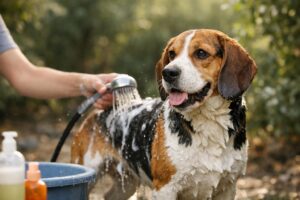
I bathe Tyler every three to four weeks. I landed on this after experimenting. At six weeks between baths, I noticed a mild but definite smell developing around week four. At two weeks, his skin started looking dry. Three to four weeks hits the right balance.
The reason this window matters is explained well by BeaglePro: the skin produces a layer of natural oil that builds up over about three weeks. At the same time, dead hairs shed into the undercoat where they sit trapped. By around week three, both of these things together start producing an odour. The bath clears the oil buildup and removes those trapped hairs.
I use a dog-specific shampoo with oatmeal. Human shampoos disrupt the pH balance of a dog’s skin and cause irritation. I follow the shampoo with a light conditioner, which makes brushing after the bath much easier and keeps the coat softer between washes.
After the bath I towel dry Tyler first, then use a low-heat dryer while brushing at the same time. Brushing during drying removes a lot of loose hair that would otherwise end up on the floor over the next few days. It is one of the most efficient steps in the whole routine.
How Diet Affects Your Beagle’s Coat
A poor diet shows up in the coat before it shows up anywhere else. When a beagle is not getting the right nutrients, the hair becomes dry and brittle, and it breaks and sheds more than it should. Proper nutrition is one of the most effective long-term ways to reduce excessive shedding, and it is also one of the easiest to overlook.
The single biggest change I made to Tyler’s coat health was adding an omega-3 fish oil supplement. Omega-3 supports both skin and coat health, helps with dry or itchy skin, and reduces the amount of dead hair the coat produces. I noticed the difference within about six weeks. His coat looked glossier and less dull between brushings.
Hydration matters too. Tyler has fresh water available at all times. Dehydrated skin produces a drier, more brittle coat. It is a small thing but it adds up over time.
If you ever need to switch Tyler’s food, do it gradually over one to two weeks. Sudden diet changes cause stress in dogs, and stress is a known trigger for increased shedding. I have seen this firsthand when I switched brands too quickly early on. The gradual approach avoids that entirely.
The Routine I Actually Stick To
Breaking it down simply, here is what I do every week:
- Monday and Thursday: 5-10 minute brush with the boar bristle brush
- Every 3-4 weeks: Bath with oatmeal shampoo, conditioner, towel dry, then brush while blow-drying on low heat
- Spring and fall: Increase to brushing most days, bring out the de-shedding tool once a week
- Daily: Fish oil capsule added to Tyler’s food
The whole thing takes maybe 20 minutes a week outside of bath days. It is genuinely low maintenance once the routine is in place. The coat stays in good condition, the house stays manageable, and Tyler is visibly more comfortable for it.
If you are just starting out, pick one habit first. Start with a weekly brush using the right tool. Everything else can follow once that feels natural. The biggest mistake I made was trying to do everything at once with the wrong equipment. Get the basics right first and the rest falls into place.
If you found this helpful, take a look at the other posts on Know Beagles for more practical guides on life with Tyler.
Frequently Asked Questions
Do beagles need professional grooming?
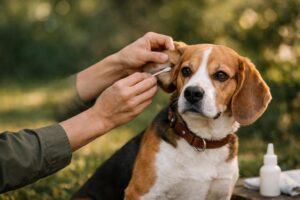
Not for coat care specifically. Beagles have a short, low-maintenance coat that can be managed at home with the right tools and a consistent routine. Where professional groomers add real value is nail trimming, ear cleaning, and handling beagles with skin conditions that need specialist products. I take Tyler to a groomer a couple of times a year for nail work, but his coat is handled entirely at home.
Can I shave my beagle to reduce shedding?
No, and it is worth being firm on this one. Shaving a double-coated dog does not reduce shedding. It disrupts the coat’s ability to regulate body temperature and protect the skin from sun and elements. The two layers of a beagle’s coat do specific jobs. Removing them causes more problems than it solves. The right response to heavy shedding is more frequent brushing, not shaving.
Why does my beagle smell even after a bath?
If the smell comes back quickly after a bath, the most likely cause is bathing too infrequently in between. Natural skin oils and trapped dead hair accumulate in the undercoat over about three weeks and begin to emit an odour. If you are bathing every six weeks, the smell is building up before the next bath. Bringing that down to every three to four weeks usually solves it. A conditioner after the shampoo also helps keep the coat fresher between washes.
What is the best brush for a beagle?
For regular weekly grooming, a boar bristle brush is the best all-round choice for a beagle’s double coat. It removes loose surface hair, distributes natural oils, and stimulates skin blood flow without causing brush burn. A rubber curry mitt is a good second tool for baths and sensitive days. During heavy shedding season only, a gentle de-shedding tool helps clear the undercoat. Avoid slicker brushes and aggressive de-shedding tools for regular use, as they go straight through the short outer coat and irritate the skin.
How do I stop my beagle from shedding so much?
You cannot stop shedding entirely, and you would not want to since it is a healthy natural process. What you can do is significantly reduce the loose hair in your home through consistent brushing, regular bathing every three to four weeks, and supporting coat health through diet and omega-3 supplementation. Brushing is the most effective single step. It removes dead hair before it falls, which is always easier than collecting it from the sofa after the fact.